

Abstract
This talk will analyse the differences and relationships among artificial intelligence and machine learning, and also advocates the intelligence revolution and show its potential impact will be much more influential than agriculture revolution and industrial revolution. ELM theories may have explained the reasons why the brains are globally ordered but may be locally random. This talk will share with audience ELM’s direct biological evidences. Finally this talk will share with audiences the trends of machine learning in which ELM may play some important roles: 1) convergence of machine learning and biological learning; 2) from human and (living) thing intelligence to machine intelligence; 3) from cloud intelligence to local intelligence; 4) from Internet of Things (IoT) to Internet of Intelligent Things and Society of Intelligent Things; 5) pervasive learning and pervasive intelligence will come true.
Biography
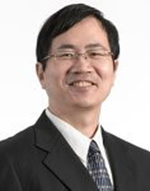 Guang-Bin Huang is a Full Professor in the School of Electrical and Electronic Engineering, Nanyang Technological University, Singapore. He is a member of Elsevier’s Research Data Management Advisory Board. He is one of three Expert Directors for Expert Committee of China Big Data Industry Ecological Alliance organized by China Ministry of Industry and Information Technology, and a member of International Robotic Expert Committee for China. He was a Nominee of 2016 Singapore President Science Award, was awarded Thomson Reuters’s 2014 “Highly Cited Researcher” (Engineering), Thomson Reuters’s 2015 “Highly Cited Researcher” (in two fields: Engineering and Computer Science), and listed in Thomson Reuters’s “2014 The World’s Most Influential Scientific Minds” and “2015 The World’s Most Influential Scientific Minds.” He received the best paper award from IEEE Transactions on Neural Networks and Learning Systems (2013).
He serves as an Associate Editor of Neurocomputing, Cognitive Computation, neural networks, and IEEE Transactions on Cybernetics.
He is Principal Investigator of BMW-NTU Joint Future Mobility Lab on Human Machine Interface and Assisted Driving, Principal Investigator (data and video analytics) of Delta – NTU Joint Lab, Principal Investigator (Scene Understanding) of ST Engineering – NTU Corporate Lab, and Principal Investigator (Marine Data Analysis and Prediction for Autonomous Vessels) of Rolls Royce – NTU Corporate Lab. He has led/implemented several key industrial projects (e.g., Chief architect/designer and technical leader of Singapore Changi Airport Cargo Terminal 5 Inventory Control System (T5 ICS) Upgrading Project, etc).
One of his main works is to propose a new machine learning theory and learning techniques called Extreme Learning Machines (ELM), which fills the gap between traditional feedforward neural networks, support vector machines, clustering and feature learning techniques. ELM theories have recently been confirmed with biological learning evidence directly, and filled the gap between machine learning and biological learning. ELM theories have also addressed “Father of Computers” J. von Neumann’s concern on why “an imperfect neural network, containing many random connections, can be made to perform reliably those functions which might be represented by idealized wiring diagrams.”
Instructors/Speakers
Prof. Guang-Bin HUANG
Nanyang Technological University
Singapore
Date & Time
9 Jun 2017 (Friday) 11:00 – 12:00
Venue
E11-4045 (University of Macau)
Organized by
Department of Computer and Information Science