
As the Faculty of Science and Technology (FST) at the University of Macau (UM) prepares to restructure into three new faculties—the Faculty of Information Science and Computing, the Faculty of Engineering, and the Faculty of Science—starting in the academic year 2026/2027, Prof Rui Paulo da Silva Martins, who served as FST Dean from 1994 to 1997 and is currently Vice Rector of the University, reflects on the faculty’s remarkable 37-year evolution.
Recalling the time he first joined the University and the Faculty of Science and Technology in 1992, Prof. Martins noted, “The Faculty of Science and Technology back then was vastly different from what it is today.” One of the most pressing challenges at the time was the severe shortage of locally based academic staff. “There were very few Macao residents with experience in higher education teaching, and those who were here had mostly been educated in the UK or the US. Most faculty members came from Portugal or the Chinese mainland, and many had not yet earned doctoral degrees.”
During his deanship, Prof. Martins established two core missions: building a structured academic career pathway and nurturing local research talent. At that time, faculty appointments were limited to two-year renewable contracts, offering neither promotion opportunities nor long-term professional development plans. To address this, he introduced a clear academic ladder: outstanding bachelor’s graduates could serve as teaching assistants while pursuing master’s degrees; those holding master’s degrees could be appointed lecturers; and individuals with PhDs would be hired as Assistant Professors, with potential pathways to associate and full professorships.
Realizing this vision required the establishment of postgraduate programs. Since the faculty initially offered only undergraduate degrees, Prof. Martins proposed launching a master’s programme in 1993, followed by a doctoral programme between 1994 and 1995. These initiatives received approval from the Macao government and became foundational pillars for cultivating a local academic workforce.
However, the early days of research were fraught with financial constraints. In the early 1990s, the university’s total annual research budget was less than MOP 500,000. Prof. Martins’ team successfully secured the university’s first three research grants—focused respectively on microelectronics, machine translation, and environmental engineering—with each project receiving MOP 40,000. Despite the modest funding, the team produced the University of Macau’s first integrated circuit (UM Chip) and initiated pioneering work in automatic translation and hydraulics.
When discussing the faculty’s educational achievements, Prof. Martins highlighted one outstanding alumnus: Prof. Pui-In Mak, now Director of the State Key Laboratory of Analog and Mixed-Signal VLSI and Macao’s first locally trained Chair Professor. A native of Macao, Prof. Mak published a paper in an IEEE journal during his undergraduate studies—an exceptionally rare feat. In recognition of his exceptional performance, the faculty granted him direct admission to the PhD programme, bypassing the master’s level. By the time he graduated in 2006, he had authored multiple top-tier conference papers, designed integrated circuits, and secured four U.S. patents. He has since been elected Fellow of the IEEE, Fellow of the Institution of Engineering and Technology (IET), and Fellow of the Royal Society of Chemistry (RSC). “His journey,” Prof. Martins remarked, “is the finest testament to the educational philosophy of our faculty.”
Looking ahead, Prof. Martins sees the upcoming tripartite restructuring not as an endpoint, but as a necessary response to the rapid evolution of science and technology. “The original FST encompassed fundamental sciences, traditional engineering, and information technology. Today, emerging fields such as artificial intelligence, robotics, and microelectronics demand deeper specialization.” He also strongly affirmed the strategic significance of the University’s expansion into Hengqin: “Macao’s physical space is limited, but Hengqin and the Greater Bay Area open vast new horizons for students—in internships, entrepreneurship, and industry–academia collaboration.” He believes this will inspire Macao’s youth to look beyond their home city and embrace greater challenges across the region.
Amid the new three-faculty structure, Prof. Martins emphasized that the pursuit of excellence must remain the unwavering core value. “Whether in teaching or research, we must always benchmark ourselves against the world’s best. This has always been our conviction—and it must never waver.” With a touch of humor, he added, “Back then, the Faculty of Science and Technology even won the university’s five-a-side football championship three years in a row!” The camaraderie of that team, he said, mirrored the collaborative spirit of the academic community he helped build.
From scarce resources to nurturing thousands of students, from scattered research efforts to a constellation of advanced laboratories, the rise of the Faculty of Science and Technology stands as a testament to vision, perseverance, and steadfast belief in Macao’s talent. Though now dividing into three distinct faculties, its legacy endures—its spirit passed on, stepping boldly into a brighter, more brilliant future.
隨著澳門大學科技學院(FST)將於2026/2027學年重組為三個獨立學院——信息學院、工程學院與理學院,曾於1994至1997年擔任科技學院院長,目前是澳大副校長的馬許願教授 (Prof. Rui Paulo da Silva Martins)回顧了學院自創立以來三十七年來的非凡蛻變。
馬許願教授憶起1992年剛加入澳大及科技學院之時 :「當年的科技學院與今日截然不同。」彼時最棘手的問題之一是本地學術人員極為匱乏。「澳門本地具備高等教育教學經驗的學術人才極為有限,且多在英國或美國接受教育。當時多數教職員來自葡萄牙或中國內地,其中不少尚未取得博士學位。」
在任期間,馬許願教授確立了兩大核心使命:建立學術職涯制度與培育本地科研人才。當時,教職員僅簽訂兩年一續的合約,既無晉升通道,也缺乏長期發展規劃。為此,他推動建立清晰的學術階梯:優秀本科畢業生可擔任助教並攻讀碩士;取得碩士者可任講師;擁有博士學位者則獲聘助理教授,並有機會晉升副教授乃至正教授。
實現這一願景,需先設立研究生課程。當時學院僅提供學士學位,馬許願教授遂於1993年提議開辦碩士課程,繼而於1994至1995年推動博士課程。這些計劃獲澳門政府批准,成為培養本地學術骨幹的重要基石。然而,科研之路起步維艱,1990年代初,大學每年總科研資金不足50萬澳門元。馬許願教授團隊成功申請了大學史上首批三個研究項目——分別聚焦微電子、機器翻譯與環境工程,每項各獲4萬澳門元資助。憑藉這筆有限的經費,團隊製作出澳門大學首枚集成電路晶片(UM Chip),並啟動自動翻譯與水力學等前沿研究。
談及學院育人成果,馬許願教授特別提到其中一位傑出代表,便是現任模擬與混合信號集成電路全國重點實驗室主任、亦是澳門首位本土培養的講座教授麥沛然教授。作為土生土長的澳門學生,他在本科期間便於IEEE期刊發表論文,實屬罕見。因其表現卓越,學院破格讓他跳過碩士階段,直接攻讀博士。2006年畢業時,他已發表多篇頂級會議論文、設計晶片,並取得四項美國專利,後更膺選為電機與電子工程師學會會士 (IEEE Fellow)、英國工程技術學會會士 (IET Fellow) 及英國皇家化學學會會士 (RSC Fellow)。馬許願教授感言:「他的成長軌跡,正是科技學院教育理念的最佳印證。」
展望未來,馬許願教授認為此次三分學院並非終點,而是對科技迅猛變遷的必要回應。「昔日的科技學院涵蓋基礎科學、傳統工程與資訊技術。如今,人工智慧、機器人、微電子等新興領域極需專業化深耕。」他亦高度肯定大學進駐橫琴的戰略意義:「澳門土地有限,橫琴與大灣區為學生打開更廣闊天地——實習、創業、產學研合作皆蘊藏無限可能。」他相信,這將激勵本地青年放眼橫琴及大灣區,勇敢迎接更大挑戰。
面對三院新格局,馬許願教授強調追求卓越應是不變的核心價值。「無論教學或科研,都須以全球頂尖水平為標竿。這一直是我們的信念,未來更不可動搖。」回憶往昔,他不忘幽默補充:「當年科技學院還連續三年贏得校內五人足球賽冠軍!」那支球隊凝聚的團隊精神,恰如他所參與打造的學術共同體。
從資源匱乏到孕育數千學子,從零星教研到多個實驗室林立,科技學院的崛起,見證了遠見、堅持與對澳門人才的信心。如今雖一分為三,其精神薪火相傳,正邁向更加輝煌的新篇章。
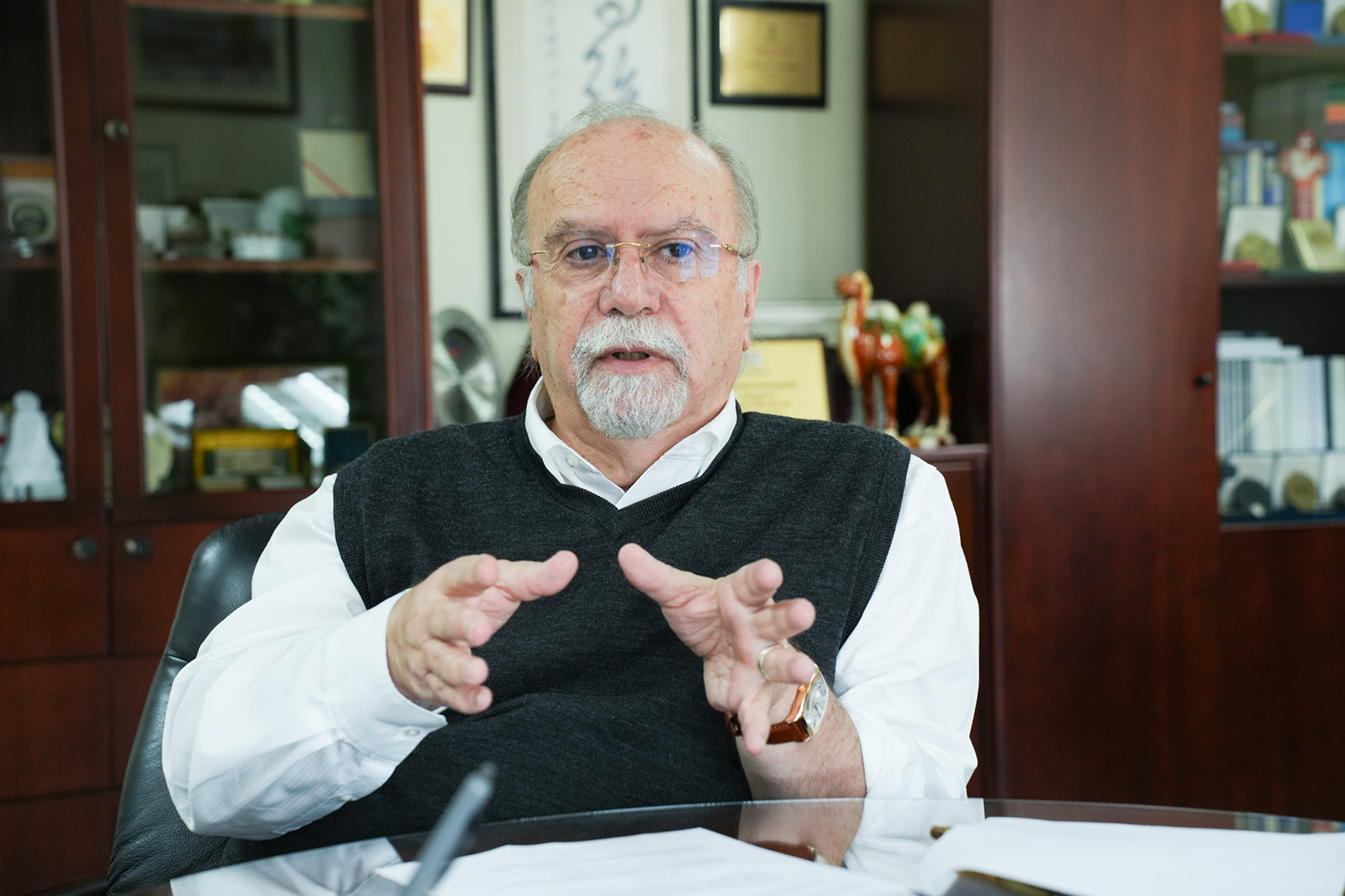
Prof. Martins shared the 37-year transformation of FST
馬許願教授分享科技學院三十七載蛻變
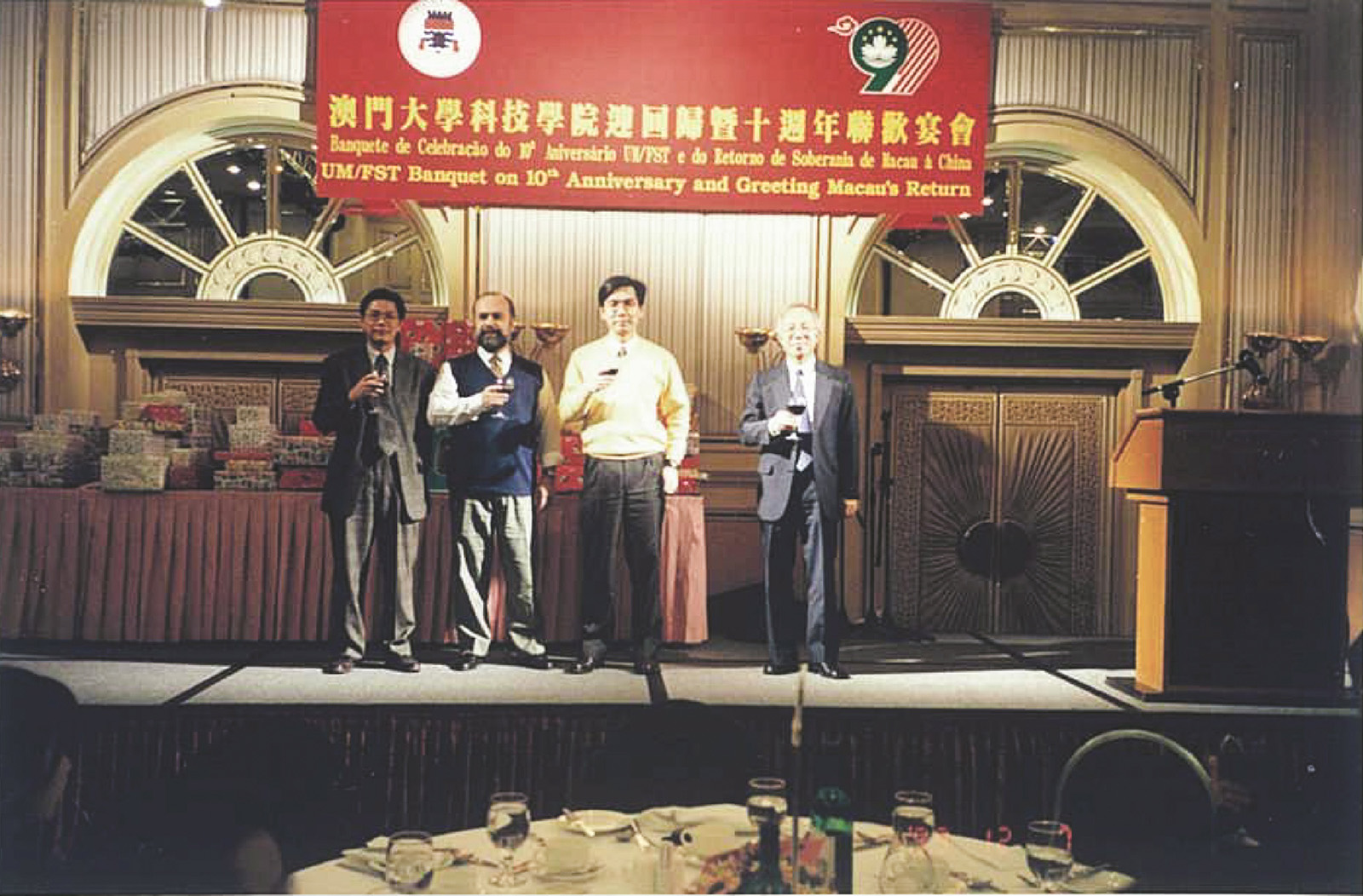
Prof. Martins celebrated the FST 10th Anniversary Gala Dinner
馬許願教授與一眾管理層慶祝科技學院十周年晚宴
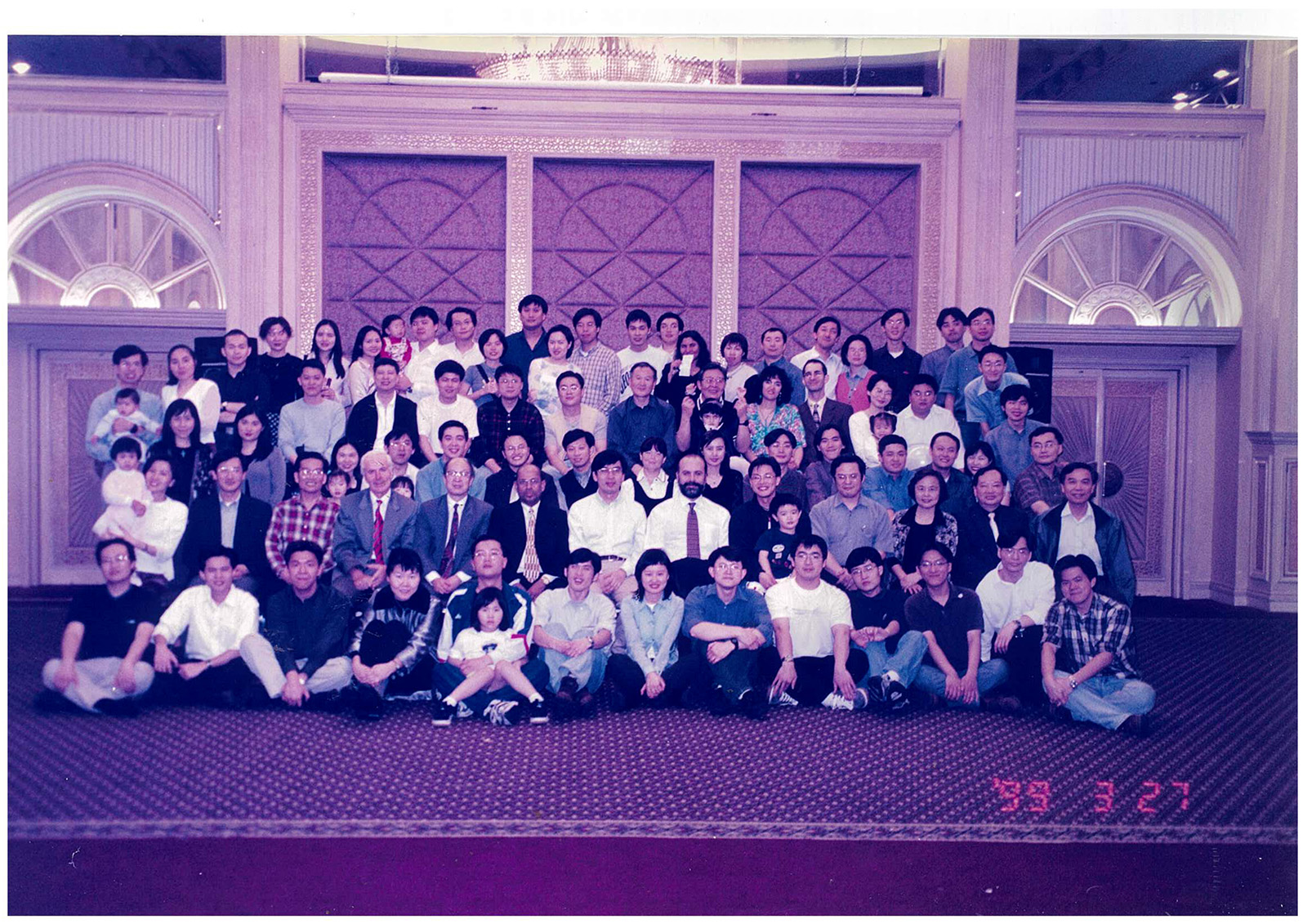
Prof. Martins (Seventh from the right in the second row) with FST team in 1999
1999年馬許願教授(第二排右七)與科技學院同事聚餐合照
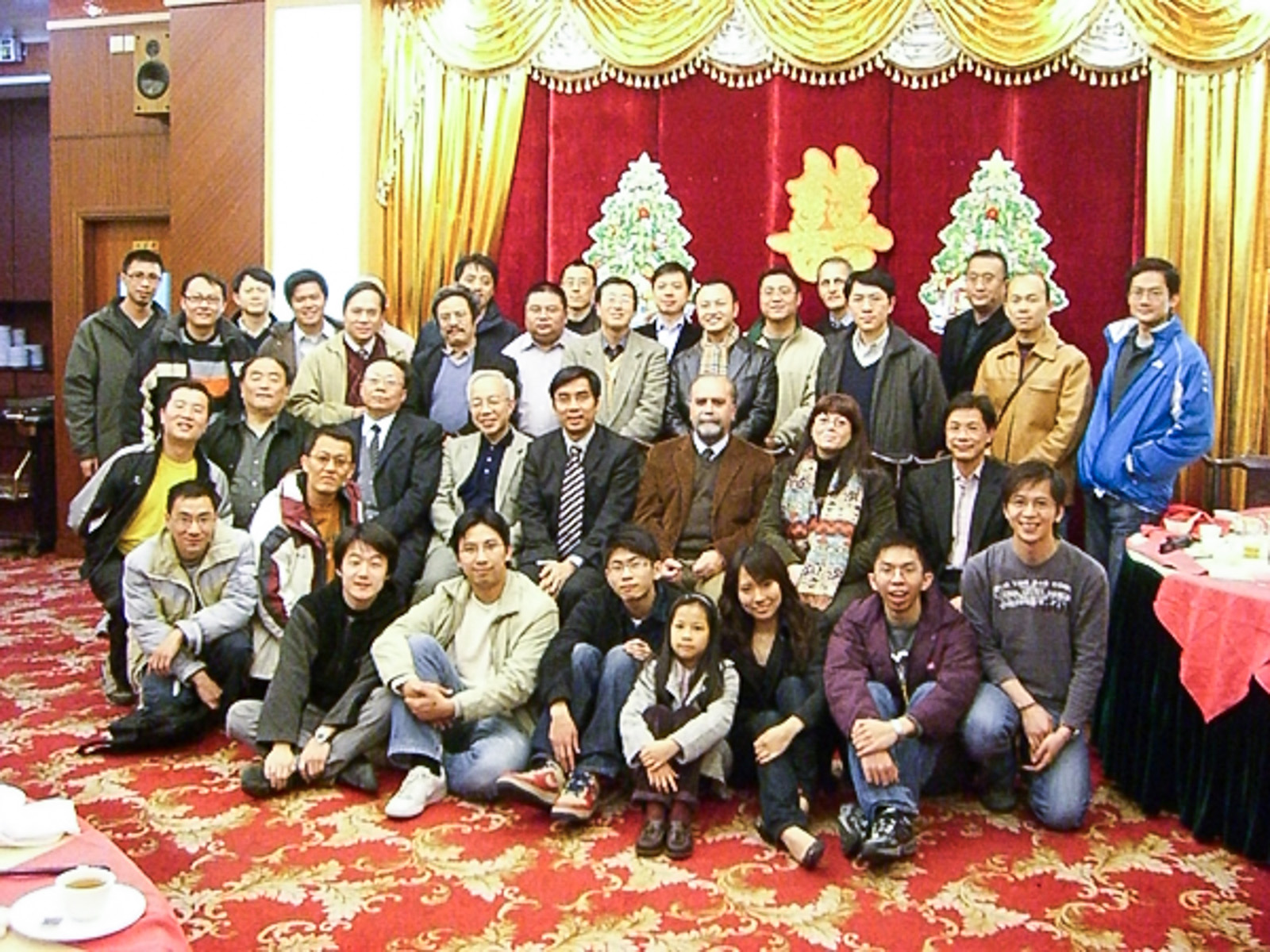
Celebratory dinner for Prof. Martins of becoming the first IEEE Fellow in Macao in 2008
科技學院同事慶祝馬許願教授榮膺澳門首位IEEE會士慶功宴(2008年)
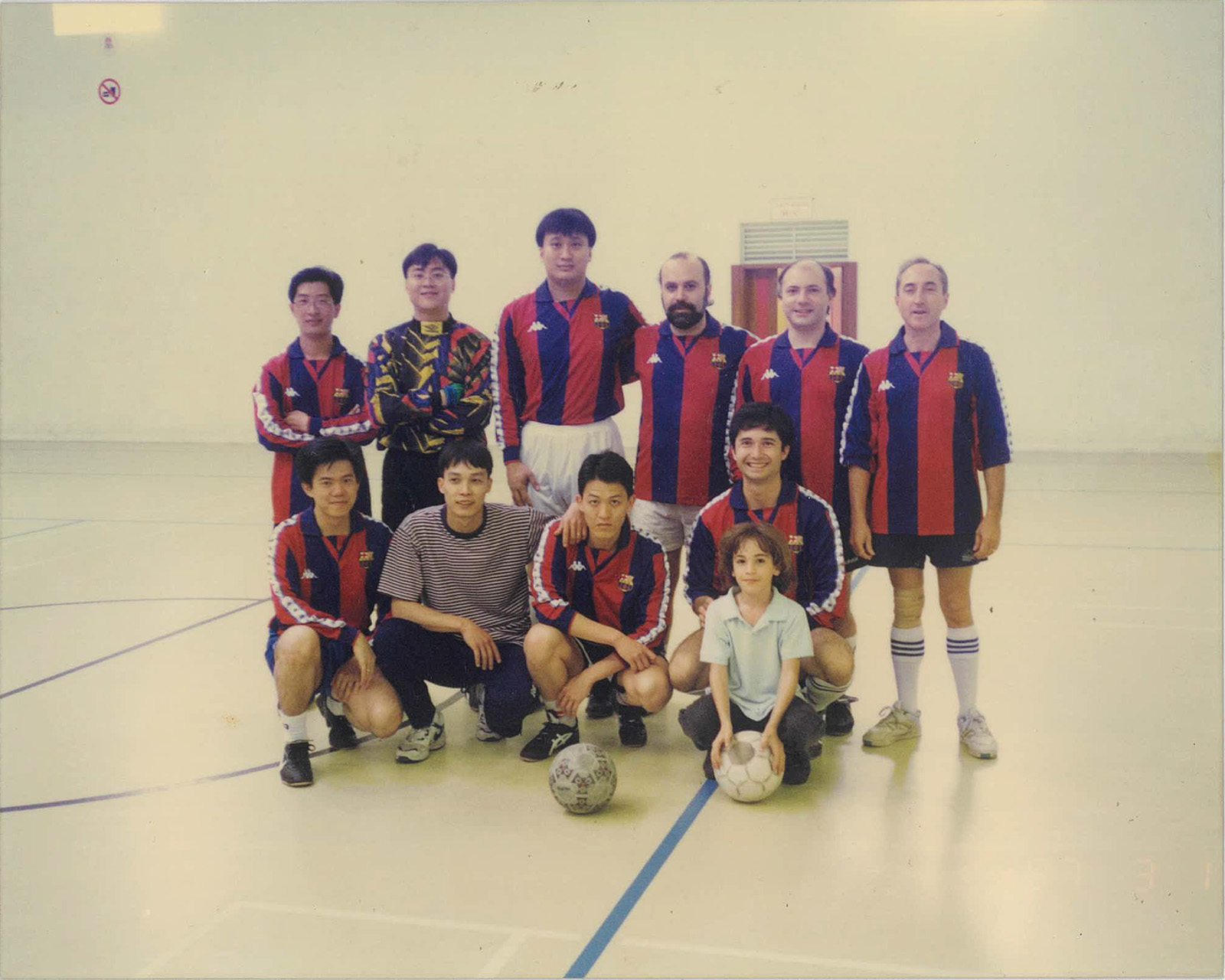
Prof. Martins formed the FST soccer ball team and won the champion in 1996
Prof. Martins組成學院足球隊並多次獲校內冠軍 (1996年)