

In June this year, at the online Innovation and Entrepreneurship Competition (Macao) for Technology Enterprises from Brazil and Portugal, DeeCo-Model was highly praised. This artificial intelligence (AI) simultaneous interpreting system, developed by DeepFuture (Guangdong Hengqin) Co., Ltd., enabled seamless communication about innovation and entrepreneurship between Chinese and Portuguese speakers during the event. Lin Yichu, an alumnus of the University of Macau (UM), is the founder of DeepFuture and a co-developer of DeeCo-Model. From his early days as a financially struggling postgraduate student to his current role as the leader of an AI company, Lin has dedicated more than a decade to paving a data-driven path in AI innovation, focusing on Portuguese and minority languages spoken in countries participating in the Belt and Road Initiative.
Facilitating communication about innovation and entrepreneurship
Macao is a platform for commercial and trade cooperation between China and Portuguese-speaking countries. In this context, Chinese-Portuguese language services play an important role in facilitating exchanges. A notable example is the Innovation and Entrepreneurship Competition (Macao) for Technology Enterprises from Brazil and Portugal, organised by the Macao Economic and Technological Development Bureau. This event attracts scientific and technological teams from Brazil and Portugal, and accurate Chinese-Portuguese translation is crucial for its smooth execution. This year, the competition showcased the capabilities of DeeCo-Model’s AI simultaneous interpreting system, which enabled real-time cross-language communication between judges from the Chinese mainland and Macao, and teams from Brazil and Portugal. According to Lin, DeeCo-Model is China’s first industry-scale AI model tailored for Portuguese-speaking markets. The system was launched in May in the Guangdong-Macao In-Depth Cooperation Zone in Hengqin, with the competition serving as a prime showcase of its capabilities.
Given the competition’s focus on cutting-edge fields like AI and biomedicine, there is a significant demand for professional language processing services. Lin explains that DeeCo-Model’s large language model, built on specialised language databases, features advanced semantic parsing capabilities. The model can also identify and adapt to the pragmatic differences between European and Brazilian Portuguese, enabling the smooth communication of technological concepts between participants and judges. Lin attributes DeeCo-Model’s success to Macao’s unique ‘three written languages and four spoken languages’ environment, as well as the research foundation he built during his time at UM.
A beacon during difficult times
Lin’s UM journey began in 2012. Shortly after receiving his acceptance letter for UM’s master’s programme, Lin and his wife discovered they were expecting their first child. While this double dose of good news brought immense happiness, it also placed significant financial pressure on the young family. Faced with the choice between pursuing his education and supporting his growing family, Lin found hope during the convocation when then-UM Rector Zhao Wei reassured students with these words: ‘No students in Macao will be unable to attend school due to financial reasons.’
Inspired by this message, Lin gathered the courage to share his financial difficulties with Prof Zhao, who responded with compassion and swift action. With the rector’s recommendation, Lin was offered a position as a UM laboratory research assistant. Reflecting on this pivotal moment, Lin says, ‘This position not only alleviated my immediate financial difficulties but also marked the true beginning of my research journey. Prof Zhao’s timely help was like a lifeline, and I will always remember it.’
As a master’s student in software engineering, Lin developed a passion for cutting-edge AI technologies. His curiosity led him to explore various laboratories at UM. Lin began his journey at the Internet of Things Engineering Laboratory, where he gained foundational knowledge. Later, he joined the Natural Language Processing & Portuguese-Chinese Machine Translation Laboratory under the mentorship of Prof Wong Fai. In this lab, Lin delved into multilingual technologies and core corpus construction methods for language processing. His journey continued at the Data Analytics and Collaborative Computing Laboratory, led by Prof Simon Fong. Here, Lin focused on collaborative computing and big data mining. These diverse and interdisciplinary experiences not only equipped Lin with a broad range of data science skills but also introduced him to a community of mentors and peers who later became key technical advisors in his entrepreneurial ventures.
Managing studies and business at the same time
Lin’s journey to earning his master’s degree took two years longer than his classmates, but by the time he graduated in 2017, he had forged a path filled with experiences that were both challenging and rewarding. During his second year of master’s studies, with most of his coursework already completed, Lin decided to embark on an entrepreneurial journey to improve his family’s financial situation. While still engaged in academic research, he founded three online-to-offline (O2O) businesses, which often required him to travel to shopping malls in Shenzhen to negotiate deals and explore new opportunities. Reflecting on that time, Lin says, ‘Those were the busiest days. I had to be a responsible father, stay on top of my academic work, and learn to make business decisions through real-world experience.’
This demanding period honed Lin’s business skills and laid the groundwork for his entrepreneurial pursuits. Balancing the responsibilities of his studies, business ventures, and family life helped Lin learn to manage stress and use his time effectively. ‘I am so grateful for the support and guidance I received from my professors and fellow students at UM,’ Lin shares. ‘They not only guided me in my research but also encouraged me during my most difficult moments.’ Looking back, Lin feels a deep sense of gratitude towards the university. ‘UM gave me more than just a degree; it’s where my dreams were nurtured,’ he reflects. ‘I found a true sense of belonging here, which gave me the strength to keep moving forward.’
Tapping into minority language markets
Lin’s studies at UM equipped him with knowledge in a range of fields, including the Internet of Things, natural language processing, computer vision, and data engineering. Meanwhile, through spearheading business projects, he gained valuable experience and sharpened his business acumen. After graduating from UM, Lin, who had dreamed of becoming an entrepreneur since childhood, decided to turn that dream into reality. He focused on machine translation and AI-driven big data. In 2018, Lin founded DeepTranx Information Technology (Zhuhai) Co., Ltd. As the company grew, it evolved into an enterprise, leading to the establishment of its parent company, DeepFuture (Guangdong Hengqin) Co., Ltd., which specialises in providing solutions for Portuguese-speaking and minority language markets in the Belt and Road Initiative. While many initially overlooked this niche field, Lin saw it as a blue ocean market filled with untapped potential.
At that time, Lin understood that the machine translation market for mainstream languages like English was highly competitive and dominated by major players. In contrast, languages such as Portuguese and those spoken in Belt and Road countries—such as Kazakh and Indonesian—were largely neglected, despite the existing potential for breakthroughs in machine translation technology. The key challenge was the lack of high-quality corpora for these languages, but Lin saw this as an opportunity. By focusing on minority languages, multilingual data, and multimodal solutions, he avoided the intense competition of mainstream markets and created a unique niche in an underexplored field.
Macao’s unique geographical and cultural advantages also provided Lin with important resources to pursue his entrepreneurial ambitions. With over four centuries of Sino-Portuguese cultural exchange, Macao is home to a wealth of Portuguese legal documents, administrative systems, and cultural heritage. This rich repository provided Lin with a natural corpus for Portuguese and real-world scenarios to test and refine his technology. He believes that the continued development of the Belt and Road Initiative, coupled with increasing economic, trade, and cultural exchanges among participating countries, will drive explosive growth in demand for language services. ‘In the global digital age, where modes of communication are evolving rapidly, AI-driven technologies like machine translation can bridge language barriers and provide critical solutions,’ Lin says.
The turning point
The beginning of a venture is always the most difficult time. From 2018 to 2020, Lin faced some of the most challenging years of his entrepreneurial journey. In the company’s early days, there was basically no revenue, and the business relied entirely on the savings Lin had accumulated during his student years. Despite the financial strain, Lin remained steadfast, devoting all his resources to improving technologies and perfecting products. Guided by the principle of ‘letting the technology speak for itself’, Lin focused on building a solid foundation for the company. Reflecting on that time, he describes it as a period where he gritted his teeth and persevered. He firmly believed that staying on the right path would eventually allow him to prove himself in the market.
The turning point came in 2020, during the global pandemic, when Lin’s perseverance finally started to pay off. As traditional office workflows were disrupted and demand for cross-border document processing surged, Lin identified a niche opportunity in medical document translation. This field, however, required interdisciplinary expertise and an exceptionally high level of precision. ‘I couldn’t achieve this alone. I needed to bring together great partners,’ Lin explains. Leveraging the network he had built during his time at UM, he assembled a talented team, many of whom were UM alumni. Together, they compiled a vast database of high-quality medical literature and clinical documents from both China and abroad, establishing a valuable corpus resource that is highly regarded in the industry.
After several years of development, Lin’s start-up has grown into a team of 35, with nearly one-third of its members coming from Macao universities. The team focuses on three core pillars of AI: data, algorithms, and computing power. Their mission is to build a compact yet powerful AI ecosystem and lead innovation in data-driven AI. One of their most notable achievements is the development of the ‘DeepData Engine’ platform, which creates high-quality AI databases that support multiple languages, modalities, and domains. This platform has also enabled the company to build a multilingual large-scale foundational model and train specialised AI applications for various industries. These include the DeepFire-Model and a Portuguese language model. Looking ahead, Lin has an ambitious vision for the company: ‘We want to become the world’s leading provider of multilingual and multimodal AI data—to be the Chinese equivalent of Scale.AI.’
Connecting the world with multilingual AI technologies
From working alone to leading a professional team, from focusing on a single technology to developing a comprehensive AI service platform, and from starting with zero revenue to achieving stable profitability, Lin has carved out a distinctive path in the fields of multilingual AI and big data. His journey exemplifies the synergy between technological expertise and sharp business acumen.
Years after graduating, Lin reflects on his time at UM with deep gratitude. ‘The university not only gave me technical skills but also taught me perseverance and pragmatism—helping me understand what I want and how to take deliberate steps to achieve it,’ he says. For Lin, entrepreneurship is an ongoing learning process, especially in an ever-evolving industry like AI. Together with DeepFuture, and leveraging the strategic advantages of the Guangdong-Hong Kong-Macao Greater Bay Area, he is committed to building cross-language bridges through increasingly accurate multilingual data solutions. By transforming state-of-the-art technologies into practical productivity tools, Lin envisions AI as a driving force across a wide range of industries. His ultimate goal is to connect the world through AI, turning innovation into opportunity and data into progress.
Source: My UM Issue 146
六月中旬,在線上舉行的「巴葡科技企業(澳門)創新創業大賽」上,一套由深繹未來(廣東橫琴)科技有限公司開發的「葡語大模型DeeCo-Model」同聲傳譯AI系統派上用場,實現中葡科創的流暢對話。該公司創始人、DeeCo-Model共同開發者,正是澳門大學校友林余楚。從昔日面臨經濟壓力的研究生,到如今執掌AI企業的領航者,林余楚用十多年時間,於葡語和「一帶一路」小語種中開闢出一條獨特的以數據驅動的AI創新路。
實現科創跨語言溝通
對作為中葡商貿合作服務平台的澳門而言,中葡語言服務是推動中國與葡語系國家交流的重要支撐。以澳門經濟及科技發展局主辦「巴葡科技企業(澳門)創新創業大賽」為例,為吸引巴西、葡萄牙的科創團隊參賽,準確到位的中葡翻譯,成為賽事順利進行的關鍵。「DeeCo-Model」同聲傳譯AI系統為多位內地及澳門評審、巴葡參賽者隊伍實現即時的跨語言溝通創造了條件。據林余楚指出,DeeCo-Model是中國首個專注於葡語國家市場的行業級大模型,於今年五月在橫琴粵澳深度合作區發佈,此次大賽是其技術落地的重要應用場景。
創業大賽的參賽項目涵蓋人工智能、生物醫藥等科技領域,對語言處理提出專業要求。林余楚介紹,DeeCo-Model的大語言模型建立專業的語言數據庫,具備深層語義解析能力,而且,該模型還能識別及反映歐葡與巴葡的語用差異,讓參賽科創隊伍與評委之間能順暢地交流項目中蘊含的科技理念。他還補充,DeeCo-Model的優勢,乃植根於澳門獨特的「三文四語」文化環境,以及他在澳大奠定的研究基礎。
困境裡的光
林余楚與澳大的故事始於2012年,剛收到澳大的碩士研究生錄取通知後,妻子懷孕的好消息也隨之傳來。雙重喜訊為這年輕家庭帶來歡欣的同時,隨之而來的是經濟壓力。正當他在學業與亟待維繫的生計之間艱難抉擇時,時任校長趙偉教授在開學禮上的一句「澳門學生不會因為經濟原因上不了學」,為他掃除了内心最大的障礙,讓他看見前路的曙光。
林余楚隨即鼓起勇氣向趙校長表露當下的困境,豈料得到快速回應,在校長的推薦下,他有機會擔任實驗室研究助理一職。「這份工作不僅緩解了我經濟上的燃眉之急,更讓我真正走上研究路。趙校長的排憂解難猶如一場及時雨,我一輩子都記在心裡。」
攻讀軟件工程碩士期間,林余楚為前沿AI技術吸引,爭取到不同實驗室學習的機會。他在物聯網實驗室學習了一段時間後,加入了自然語言處理與中葡機器翻譯實驗室,在黃輝教授門下鑽研多語言技術與語料庫建構的核心方法;其後,再到方正天教授領軍的數據分析實驗室,深耕協同計算與大數據挖掘技術。這一系列的跨領域探索,不僅讓他掌握了多個數據科學的技術,也無形中編織起跨學科的人脈網絡,此時結識的師友、師兄弟,都成為他日後創業路上重要的技術智囊。
一邊求學,一邊創業
林余楚比同屆同學花多兩年時間才取得碩士學位證書,2017年畢業時,他多走了一段迂迴卻豐盈的路。研二時,已修完大半課程的他,為改善家計開始奔波創業——埋頭學術研究的同時,先後創立三個O2O(Online to Offline)項目,穿梭於深圳商廈之間洽談業務,尋求業績上突破。「那是最忙碌的時光,」他回憶道:「既要當個稱職的父親,又要維持研究水準,還得在創業中學習商業決策。」
這段經歷淬煉了林余楚的商業眼光,奠定了創業基礎,而他同時兼顧學業、創業及家庭,更鍛煉出抗壓及高效分配時間等能力。「幸好有眾多老師和同門的支持和點撥,他們不僅在研究上指點迷津,更在我最低谷時給予勉勵。」回首這段歲月,他很感恩:「澳大給我的不只是學位,更是一個孕育夢想的園地。在這裡,我找到一份溫暖的歸屬感,鼓勵我勇往直前。」
進軍小語種「藍海」市場
澳大的學習經歷,使林余楚成功涉獵到物聯網、自然語言處理、計算機視覺、數據工程等不同領域的知識,他也在商場上累積了創業經驗和商業技巧。研究生畢業後,自幼懷有創業夢想的林余楚,毫不猶豫地選擇繼續為創業打拼,這次,他把目光聚焦於機器翻譯、AI大數據。2018年,林余楚創立深譯信息科技(珠海)有限公司,後公司集團化發展,成立母公司深繹未來科技(廣東橫琴)有限公司,並鎖定在葡語系與「一帶一路」小語種市場,這個當時被很多人看作「冷門」的領域,在他眼裡卻是潛力巨大的「藍海」。
他認為,當時英語等主流語種的機器翻譯是競爭的主流市場,而葡語及「一帶一路」沿線語言如哈薩克語、印尼語等,雖在機器翻譯技術上有突破的基礎,卻因高質量語料庫的匱乏而被市場忽視。林余楚捕捉這一市場缺口的機遇,避開巨頭環伺的戰場,專注於小語種、多語言、多模態的數據開發和服務,果斷進軍這片尚待開發的「藍海」。
林余楚的商業眼光還根植於澳門獨特的地緣文化優勢。400年中葡文化交融,讓澳門積澱了豐富的葡語法律文獻、行政體系及文化遺產,為他提供了天然的葡語語料庫與驗證場景。他相信,隨著「一帶一路」建設深入推進,沿線國家經貿文化往來日益頻繁,語言服務需求必迎來爆發式增長,「全球數位化時代到來,新時代溝通方式轉變,機器翻譯等AI大模型技術就可以補位,提供重要的解決方案。」
破局的關鍵時刻
萬事起頭難,2018至2020年,是林余楚最艱難的日子。創業初期,公司幾乎沒有營收,全憑林余楚在求學期間的積累苦苦支撐,這段時間,他將所有資源都投入到技術優化與產品打磨上,堅持「用技術說話」的信念。林余楚用「咬緊牙關」形容那段日子,但他始終相信,只要方向正確,就有機會在市場實戰中驗證實力。
機會很快就到來。2020年全球疫情爆發,成為他創業的關鍵轉折點。當傳統辦公模式面臨挑戰,跨境文件處理需求激增之際,林余楚敏銳地捕捉到醫療資料翻譯的市場機遇。但這是一個需要跨學科知識、具有高度專業門檻的領域,「單打獨鬥行不通,必須集結優秀的夥伴。」於是,憑藉在澳大積累的人脈資源,林余楚迅速組建起一支由澳大同門師兄弟為核心的專業團隊,匯集國內外頂尖醫療文獻與臨床文件,打造出一個醫療醫藥領域的海量數據庫,成為行業內極具價值的專業語料資產。
經過數年發展,這初創公司現已打造出一支35人的團隊,其中近三分之一成員來自澳門高校。團隊圍繞人工智能「數據、算法、算力」三大要素,努力構建AI人工智能小生態,發展出以數據驅動AI的新範式。公司自主研發數據開發服務平台「深數引擎(DeepData Engine)」,構建多語言、多模態、多領域、高質量AI數據庫,另還研發出多語言大模型底座。基於該數據庫和演算法底座,開發訓練各垂類大模型應用,先後發佈了「橙救」消防大模型、葡語大模型。林余楚強調:「我們將致力成為全球領先的多語言多模態AI數據提供商,做中國版Scale.Al。」
多語言AI技術連結全世界
從單打獨鬥到組建專業團隊,從單一技術研發到搭建AI服務平台,從營收掛零到實現穩定盈利,林余楚憑技術優勢和商業眼光,在多語言AI大數據領域開創了一條屬於自己的科創賽道。
畢業多年再談澳大求學時光,他依然滿是懷念:「學校不僅教我技術,更教會我堅持和務實——知道自己要甚麼,然後一步一步去做。」面對AI產業的快速迭代,林余楚把創業看作「終身不畢業的課堂」,他將與深繹未來科技一起,以粵港澳大灣區為支點,以數據為驅動,用更精準的多語言數據架起更多跨語橋樑,將最前沿技術轉化為觸手可及的生產力工具,持續推動AI深入千行百業,實現讓AI連結全世界的願景目標。
來源:《澳大人》第146期
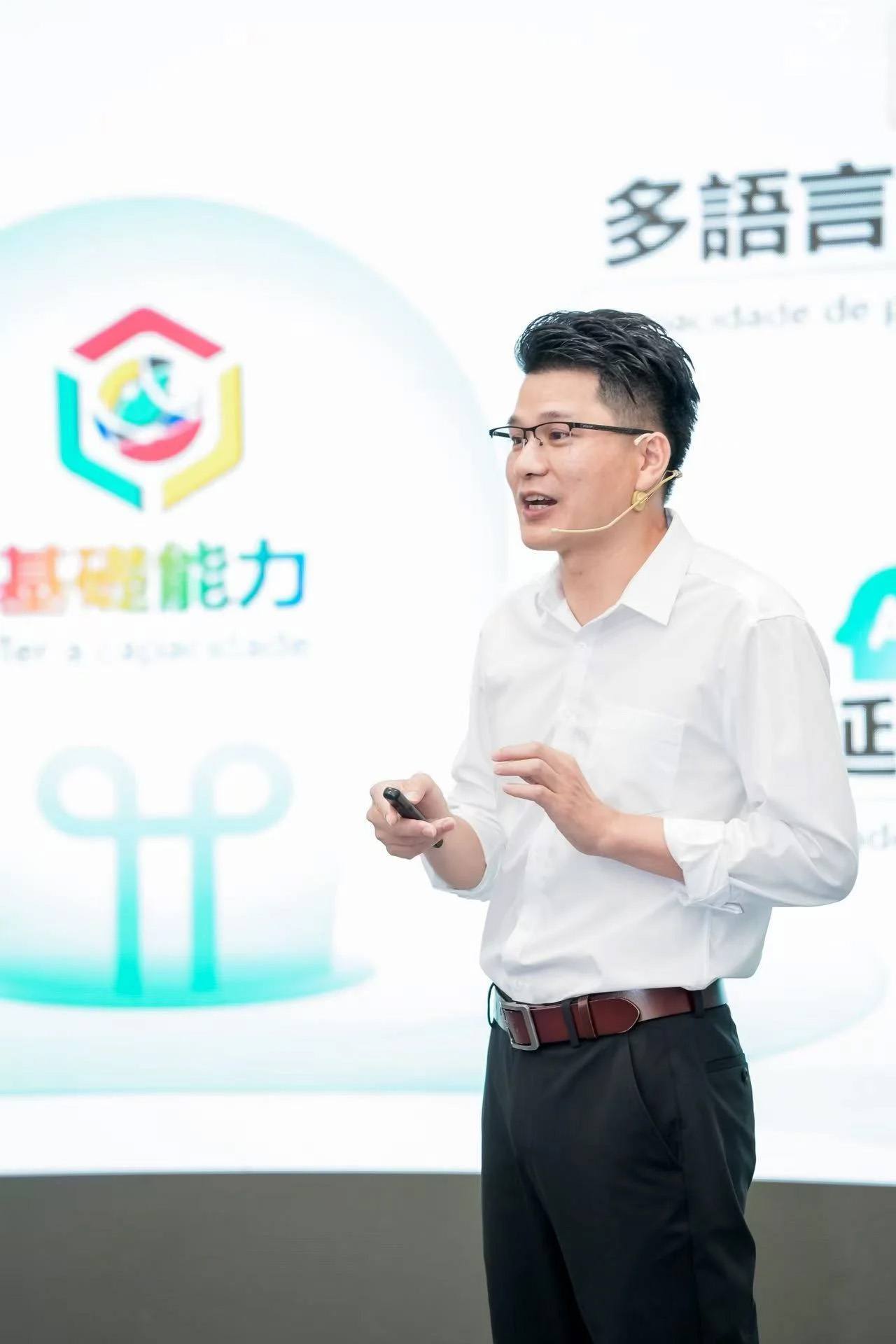
Lin Yuchu
林余楚
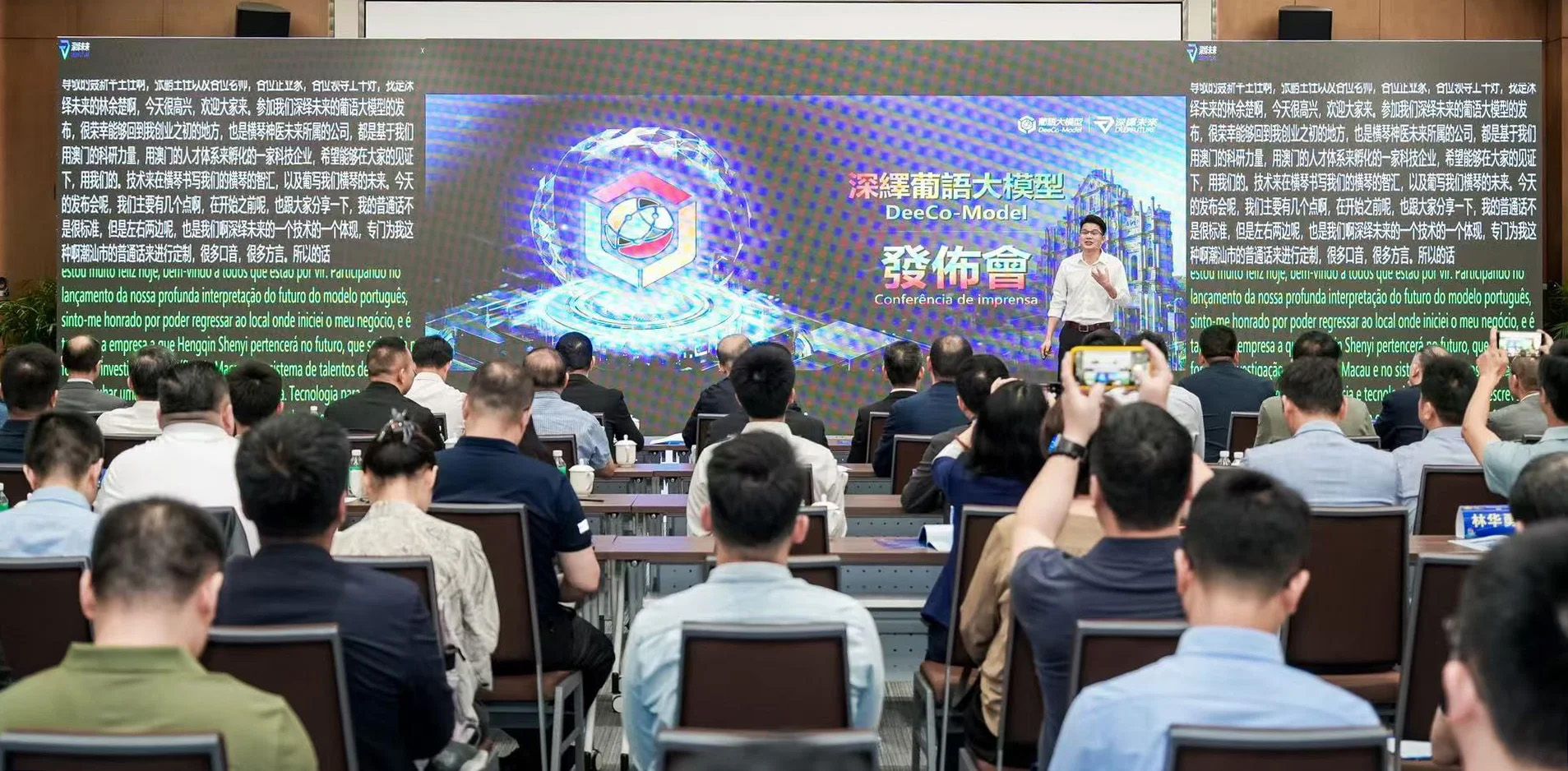
DeeCo-Model was launched in May in the Guangdong-Macao In-Depth Cooperation Zone in Hengqin
DeeCo-Model 大語言模型五月在橫琴粵澳深度合作區發佈
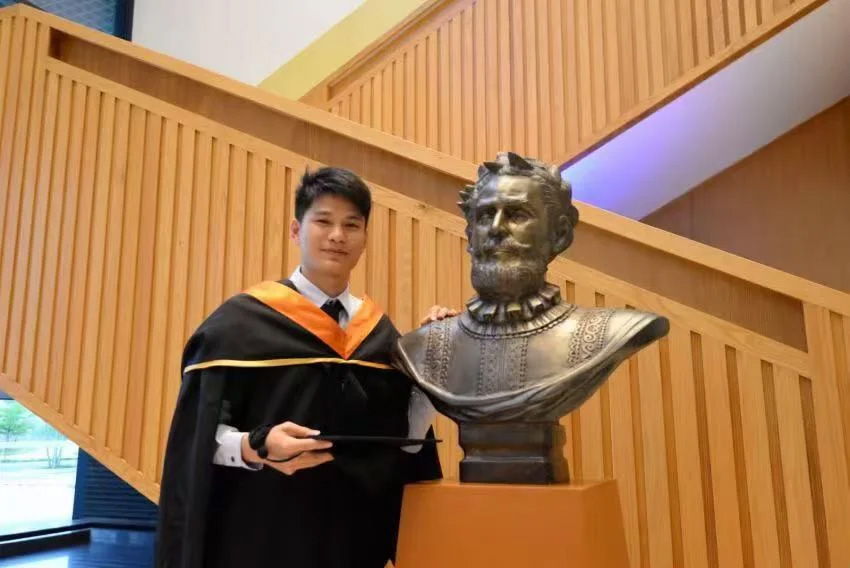
Lin Yuchu attends the congregation at the University Hall
林余楚在大學會堂參加畢業典禮

Lin Yuchu celebrates graduation by throwing his cap into the air with his classmates
林余楚與同學拋帽,慶祝畢業
數據要素產業創新大會上發表演說.jpg)
Lin Yuchu gives a speech at the China (Shenzhen) Data Industry Innovation Conference
林余楚在中國(深圳)數據要素產業創新大會上發表演說
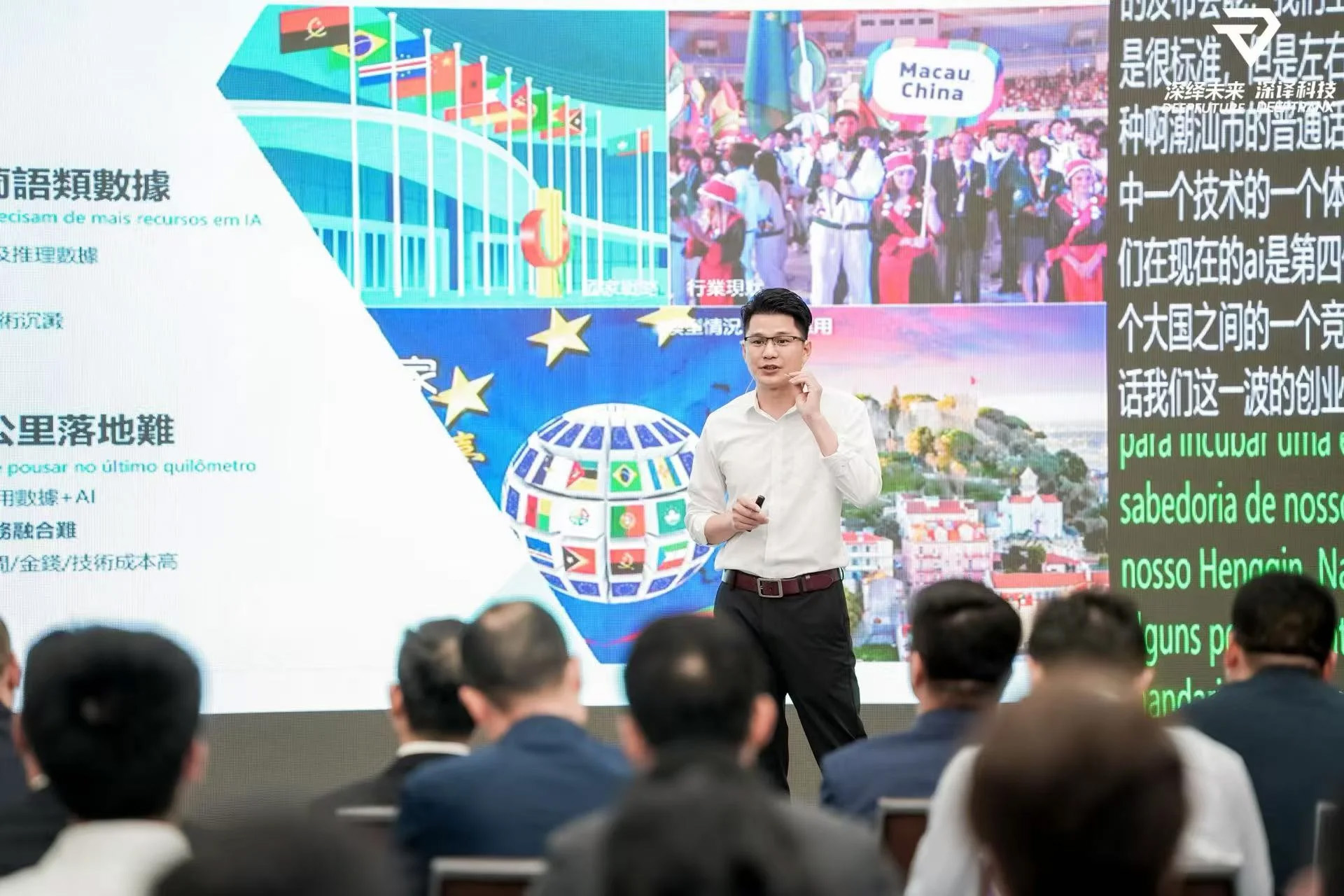
Lin Yuchu’s team targets the Portuguese-speaking and minority language markets in the Belt and Road Initiative
林余楚團隊鎖定在葡語系與「一帶一路」小語種市場
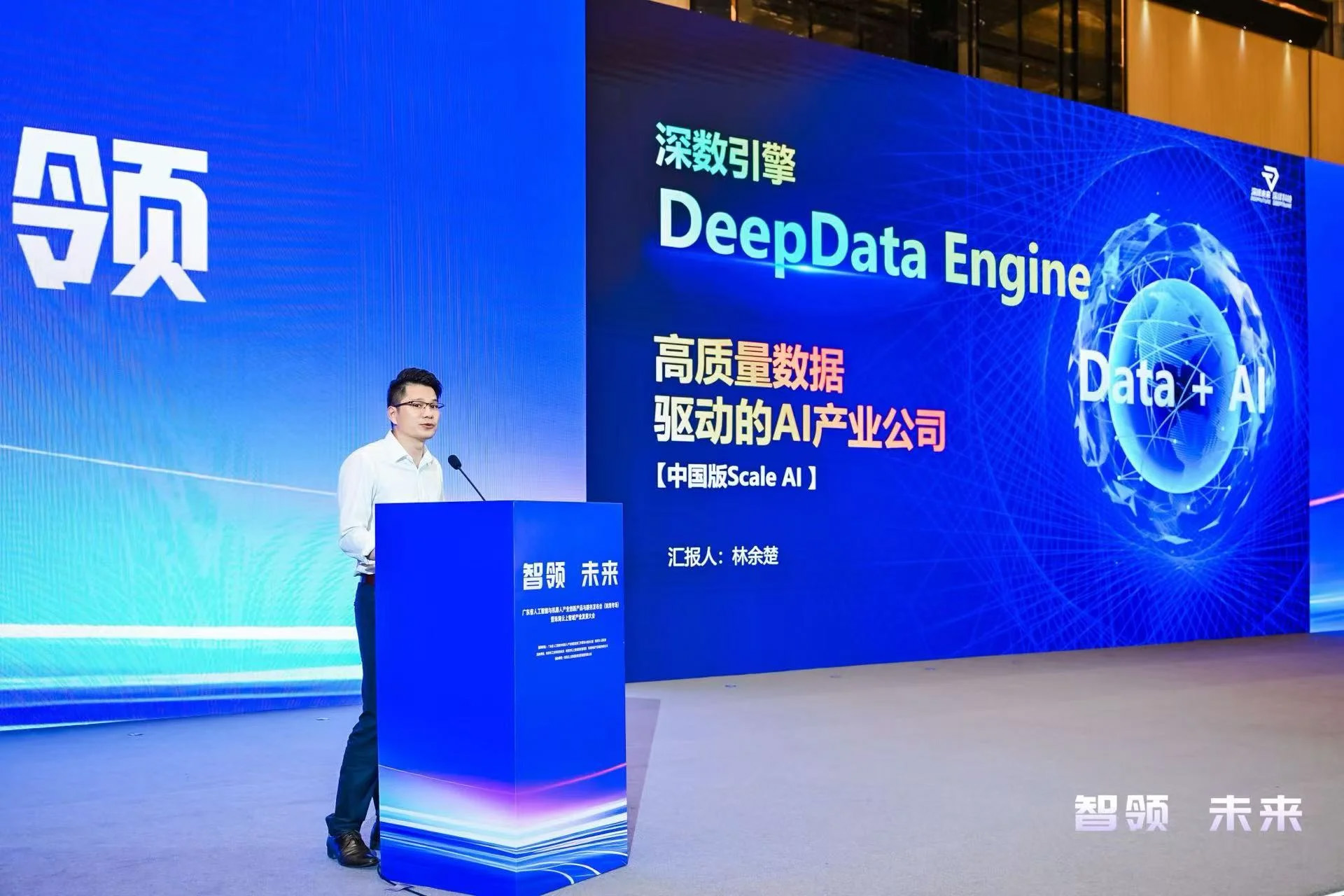
Lin Yuchu leads his team in developing the ‘DeepData Engine’ service platform
林余楚引領團隊開發服務平台「深數引擎」