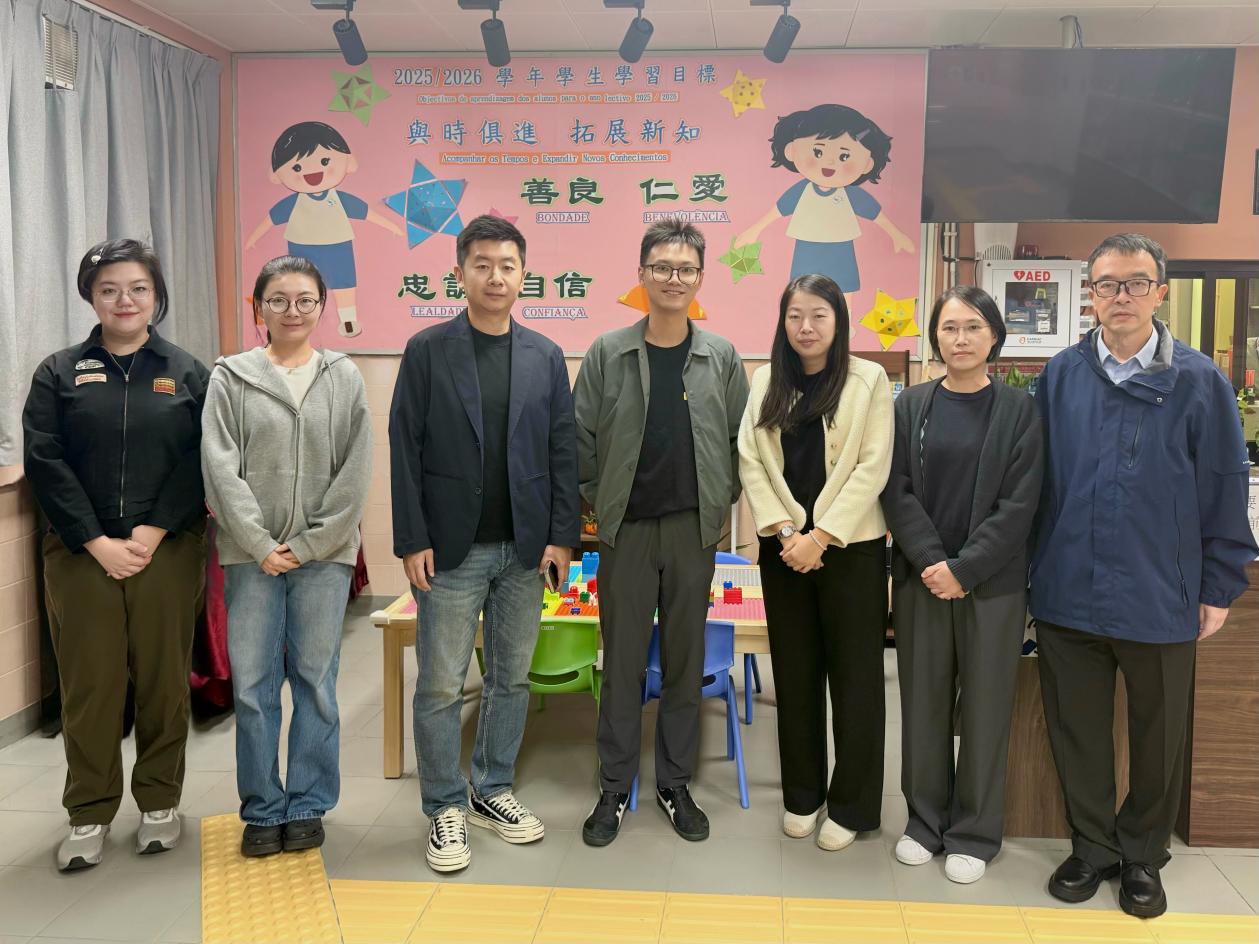
A research team led by Assistant Professor Ye Wang from the Department of Computer and Information Science, Faculty of Science and Technology, University of Macau, recently visited Escola Pública de Dois Lodos to deliver an academic exchange and research-sharing session on “Digital Support for Special Education.” The visit, held at the school’s invitation, was also joined by Associate Professor Ren Xipei from the Department of Arts and Design. The event aimed to strengthen the integration of university research with local special education practices, exploring how intelligent tools and innovative pedagogical design can better support students with diverse learning needs and developmental profiles, thereby promoting high-quality development and inclusive education in Macao.
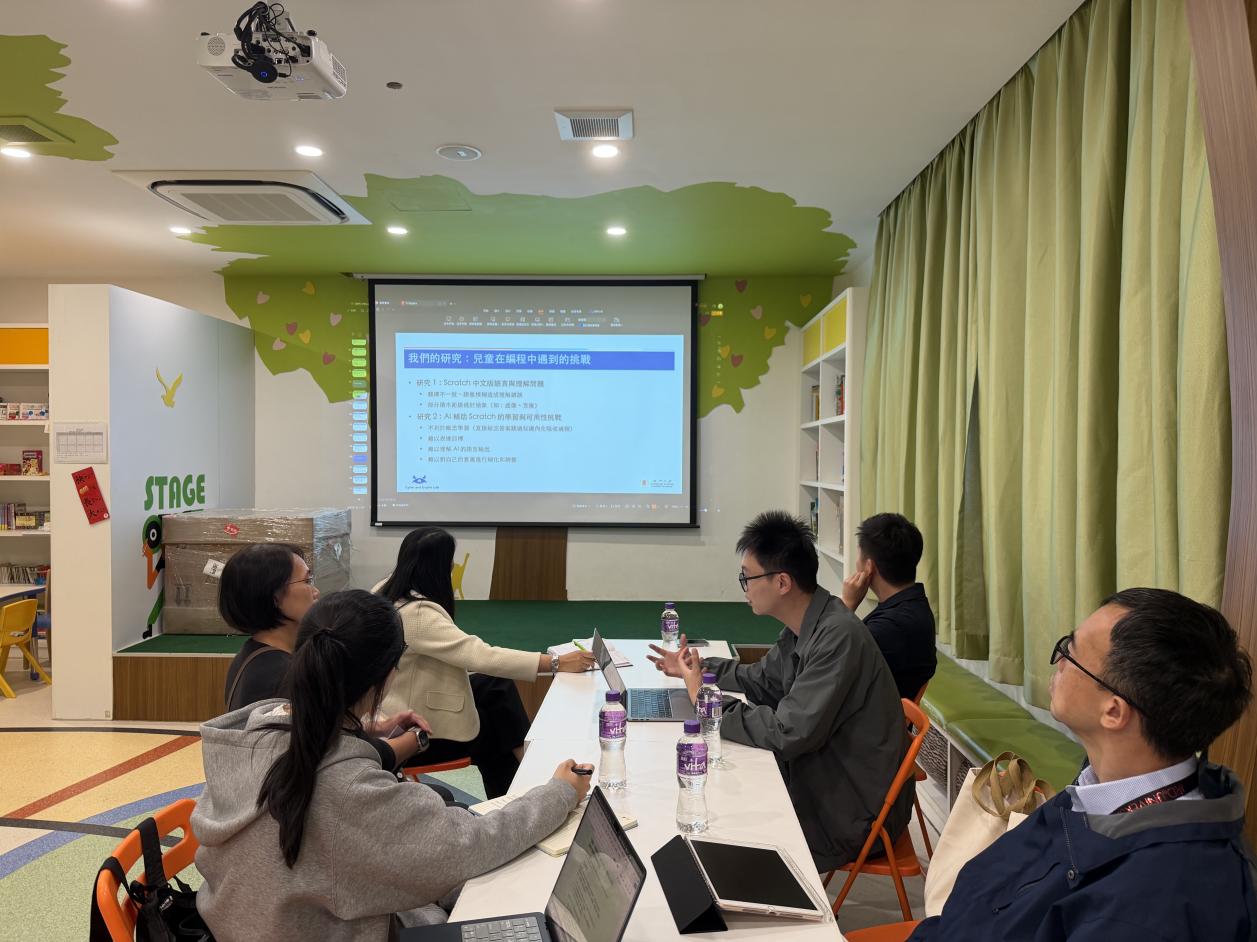
During the session, Prof. Wang delivered a talk titled “Building a Supportive Digital Learning Ecosystem: Digital Safety and the Development of AI and Programming Literacy in Special Education.” He introduced his team’s latest research on digital safety education and the enhancement of AI and programming literacy among special education students. The presentation emphasized creating a student-centered, inclusive, and safe digital learning ecosystem that allows learners with diverse needs to receive comprehensive support in the age of AI. Prof. Wang also proposed multiple HCI-driven teaching and design strategies—including multimodal prompting, adaptive learning flows, simplified interaction interfaces, and improved explainability of digital resources—which received strong positive feedback from attending teachers. Team members Si Jianing and Lau Wanyi from Prof. Wang’s group also participated and assisted in demonstrating instructional design concepts.
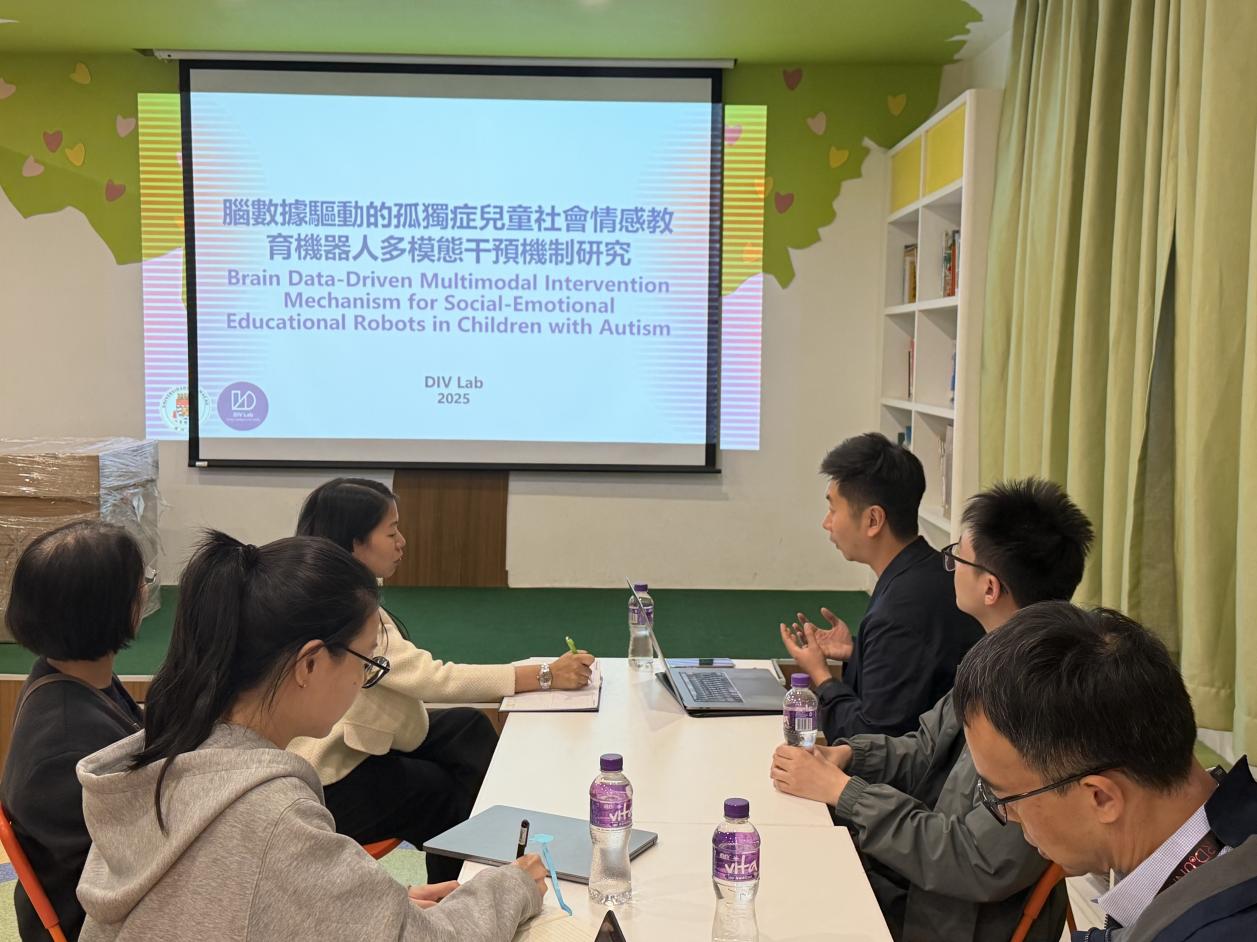
Associate Professor Ren Xipei presented his research titled “Brain-Data-Driven Multimodal Intervention Mechanisms for Social–Emotional Educational Robots for Children with Autism Spectrum Disorder.” He shared cutting-edge work integrating EEG signals, behavioral features, and multimodal interactive technologies to support the social–emotional development of children with ASD. The findings highlight the potential of intelligent educational robots in enhancing interaction motivation and improving daily adaptive functioning, offering valuable insights for the development of intelligent-technology-supported special education in Macao.
Throughout the event, teachers and scholars engaged in in-depth discussions on topics such as digital safety for special education students, the usability and interpretability of AI tools, and the implementation of game-based and visual programming learning models. Both sides agreed that with the rapid proliferation of AI and digital learning tools, special education requires more targeted support strategies, including establishing a digital environment that is safe, usable, and understandable, and equipping teachers with practical, implementable resources and interdisciplinary support.
This academic exchange further strengthened collaboration between the University of Macau and local special education institutions, advancing the translation of research outcomes into practice within Macao’s educational ecosystem. UM will continue leveraging its strengths in artificial intelligence, human–computer interaction, educational technology, and social innovation, working closely with the special education community to build a more inclusive, diverse, and sustainable educational environment that supports the long-term development of students with different learning needs.
Prof. Wang’s research team has long focused on Human–Computer Interaction (HCI) and AI-empowered education, achieving multiple research outcomes with substantial international impact. Over the years, the team has consistently published papers with the University of Macau as the first affiliation at ACM CHI, the world’s premier conference in HCI, and ACM Transactions on Computer-Human Interaction (TOCHI), the field’s top journal—marking an important breakthrough for the University of Macau in this research area.
澳門大學科技學院電腦與資訊科學系助理教授王也率領的科研團隊,近日赴澳門二龍喉公立學校,開展以「特殊教育數字支持」為主題的學術交流與成果分享活動。此次活動應學校邀請舉行,同時參與的還有澳門大學藝術與設計系副教授任熹培。活動旨在促進高校科研與本地特殊教育實踐的深度結合,探索如何透過智能化工具與創新教學設計,更好地支持不同學習需要與身心特徵的學生,推動澳門特殊教育的高品質發展與融合教育建設。
在交流會上,王也教授作《構建支持性的數字學習生態:特殊教育中的數字安全保障與 AI 及編程素養發展體系》主題報告,介紹團隊在特殊教育學生數字安全教育、AI 與編程素養培育方面的最新研究成果。報告重點探討如何構建以學生為中心、兼具包容性與安全性的數字學習生態,使具有不同學習需要的學生能在人工智能時代獲得更全面的學習支持。王教授提出多項面向特殊教育場景的人機互動與教學設計策略,包括多模態提示、自適應學習流程、簡化交互介面,以及提升可理解性的數字資源設計,獲現場教師的高度肯定。王也教授團隊成員司佳寧及劉婉儀亦全程參與交流,並協助展示教學設計實例。
任熹培教授則分享題為《腦數據驅動的孤獨症兒童社會情感教育機器人多模態干預機制研究》的學術報告,介紹團隊透過腦電訊號、行為特徵與多模態交互技術,支援孤獨症譜系障礙(ASD)兒童社會情感能力培養的前沿研究成果,展示智能教育機器人在提升互動動機與日常生活適應能力方面的巨大潛力,為本澳特殊教育融合智能科技發展提供了重要參考。
交流期間,二龍喉公立學校教師與兩位學者就特殊教育學生在數字環境中的安全保障、AI 工具的可用性與可理解性、遊戲化與視覺化編程課程設計等主題進行深入討論。雙方一致認為,在人工智能與數字學習工具迅速普及的背景下,特殊教育需具備更具針對性的支持策略,包括建構「安全、可用、可理解」的數字媒介環境,並為教師提供可落地的教學資源與跨專業支援。
此次活動進一步深化了澳門大學與本澳特殊教育機構之間的合作關係,推動科研成果在本地教育體系的實際落地。未來,澳大將繼續發揮其在人工智能、人機互動、教育科技與社會創新領域的專長,與本澳特教界攜手共同構建更具包容性、多元化與可持續的教育生態,促進不同學習需要學生的全面與長遠發展。
王也教授團隊長期專注於人機互動(Human–Computer Interaction)與 AI 賦能教育領域研究,取得多項具國際影響力的科研成果。團隊多年來持續以澳門大學為第一單位,在國際公認的人機互動頂級會議 ACM CHI 與頂級期刊 ACM Transactions on Computer-Human Interaction(TOCHI) 發表研究論文,標誌著澳門大學在該領域研究上的重要突破。