

The 2026 Macau International Symposium on Radiotheranostics took place at the main campus of the University of Macau (UM) and the University of Macau Advanced Research Institute in Hengqin (HUMRI) on 12 and 13 May. It was jointly organised by the UM Faculty of Science and Technology, UMTEC Limited, HUMRI, the University of Chicago, the Macao Society of Nuclear Medicine and Molecular Imaging, the Nuclear Medicine and Radiation Protection Branch of the Zhuhai Medical Association, and the Institute of High Energy Physics of the Chinese Academy of Sciences. Over 100 researchers and clinical experts from Macao SAR, Hong Kong SAR, Taiwan China, the mainland China, the US, Australia, South Korea, and Indonesia gathered to discuss the latest developments and future directions in radiotheranostics.
The first day of the symposium took place at the UM main campus with 12 presentations. During the opening ceremony, Ge Wei, vice rector of UM, Carlos Jorge Ferreira Silvestre, head of the UM Department of Electrical and Computer Engineering, and Georges El Fakhri, Director of Yale Biomedical Imaging Institute, delivered opening remarks. The event also featured a panel discussion, where leading experts from around the world engaged in in-depth discussions on topics including fostering international collaboration and promoting the routine clinical application of personalised dosimetry in radiotheranostics.
The second day of the symposium was held at HUMRI and featured six presentations. The opening remarks were delivered by Chen Guokai, executive vice director of HUMRI; Wang Jing, president of the Chinese Society of Nuclear Medicine; Ouyang Wei, chair of the Nuclear Medicine Branch of the Guangdong Medical Association; and Xu Jiehua, chair of the Nuclear Medicine and Radiation Protection Branch of the Zhuhai Medical Association.
The symposium was co-chaired by Greta Mok, professor in the UM Faculty of Science and Technology; Georges El Fakhri; and Chien-Min Kao at the University of Chicago. Featuring plenary talks on artificial intelligence-assisted personalised dosimetry, the development of novel tracers and isotopes, the clinical applications of radiotheranostics, and novel imaging technologies, the symposium provided an important platform for international academic collaboration, data sharing, and clinical translation. Held in both Macao and Hengqin, the symposium highlighted the advantages of the Guangdong-Macao In-Depth Cooperation Zone in Hengqin in facilitating international academic exchanges, advancing cross-border scientific innovation and precision medicine within the Guangdong-Hong Kong-Macao Greater Bay Area.
由澳門大學科技學院、澳大創科有限公司、橫琴澳門大學高等研究院、美國芝加哥大學、澳門核醫及分子影像學會、珠海市醫學會核醫學與放射防護學分會及中國科學院高能物理所合辦的“2026澳門國際核素診療一體化研討會”一連兩日於澳大主校區和橫琴澳大高等研究院舉行,來自中國內地、港澳台,以及美國、澳洲、韓國、印尼等超過100名研究人員和臨床專家,共同探討核素診療一體化領域的最新發展和未來方向。
會議首日在澳大主校區舉行,共安排12場專題報告。開幕式上,澳大副校長葛偉、電機及電腦工程系主任Carlos Jorge Ferreira Silvestre,以及美國耶魯大學生物醫學影像中心主任Georges El Fakhri分別致歡迎辭。會議設有專題討論環節,多位國際知名專家參與交流,圍繞如何促進國際合作、推動個體化劑量學在核素診療一體化中的常規臨床應用等議題展開深入交流。
翌日會議在橫琴澳大高等研究院舉行,共安排6場專題報告。橫琴澳大高等研究院執行副院長陳國凱、中華醫學會核醫學分會主任委員汪靜、廣東省醫學會核醫學學會主任委員歐陽偉,以及珠海市醫學會核醫學與放射防護學分會主任委員許杰華分別致辭。
會議由澳大科技學院教授莫昇萍、Georges El Fakhri以及芝加哥大學教授高建民共同擔任大會主席,圍繞人工智慧輔助個體化劑量學、新型示蹤劑與同位素研發、核素診療一體化臨床應用、新型影像技術等前沿方向展開深入討論,為國際學術合作、資料共用及臨床轉化提供了重要交流平台。會議分別在澳門與橫琴兩地舉辦,進一步彰顯了橫琴粵澳深度合作區在推動國際交流、粵港澳大灣區跨境科技創新與精準醫療發展方面的獨特優勢。
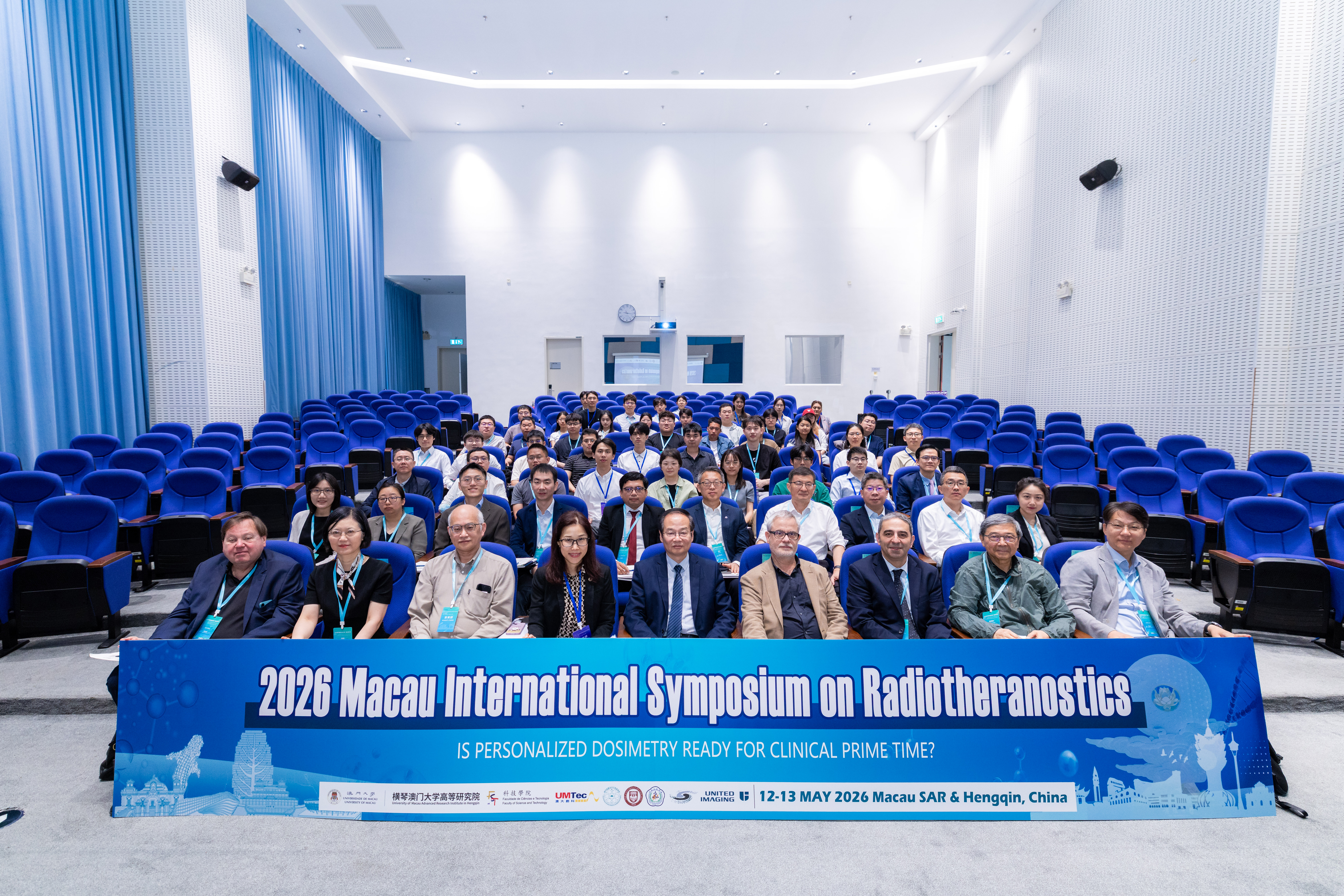
Group Photo at UM
澳大主校區合照
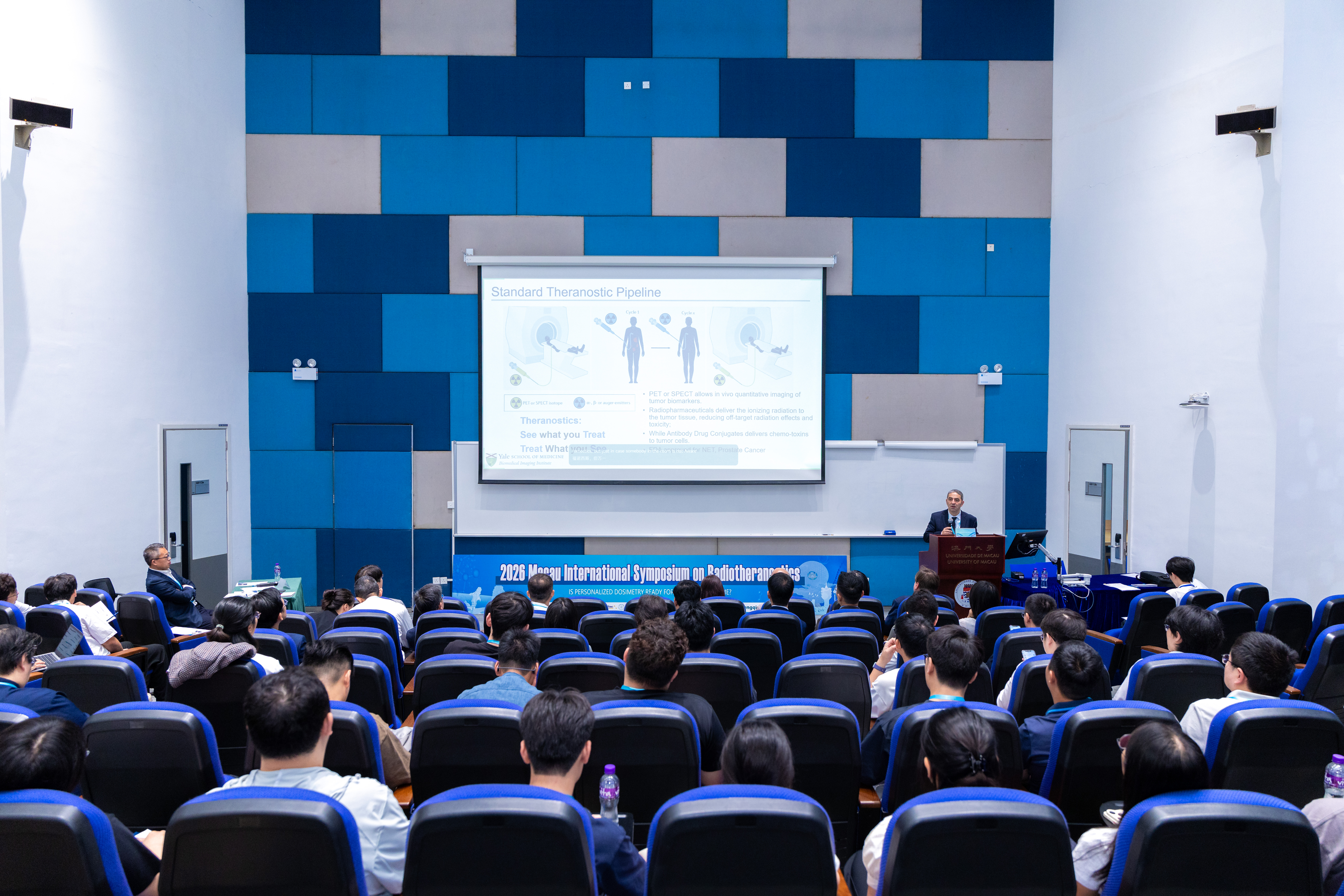
The first day of the Macau International Symposium on Radiotheranostics takes place at the UM main campus
澳門國際核素診療一體化研討會首日在澳大主校區舉行
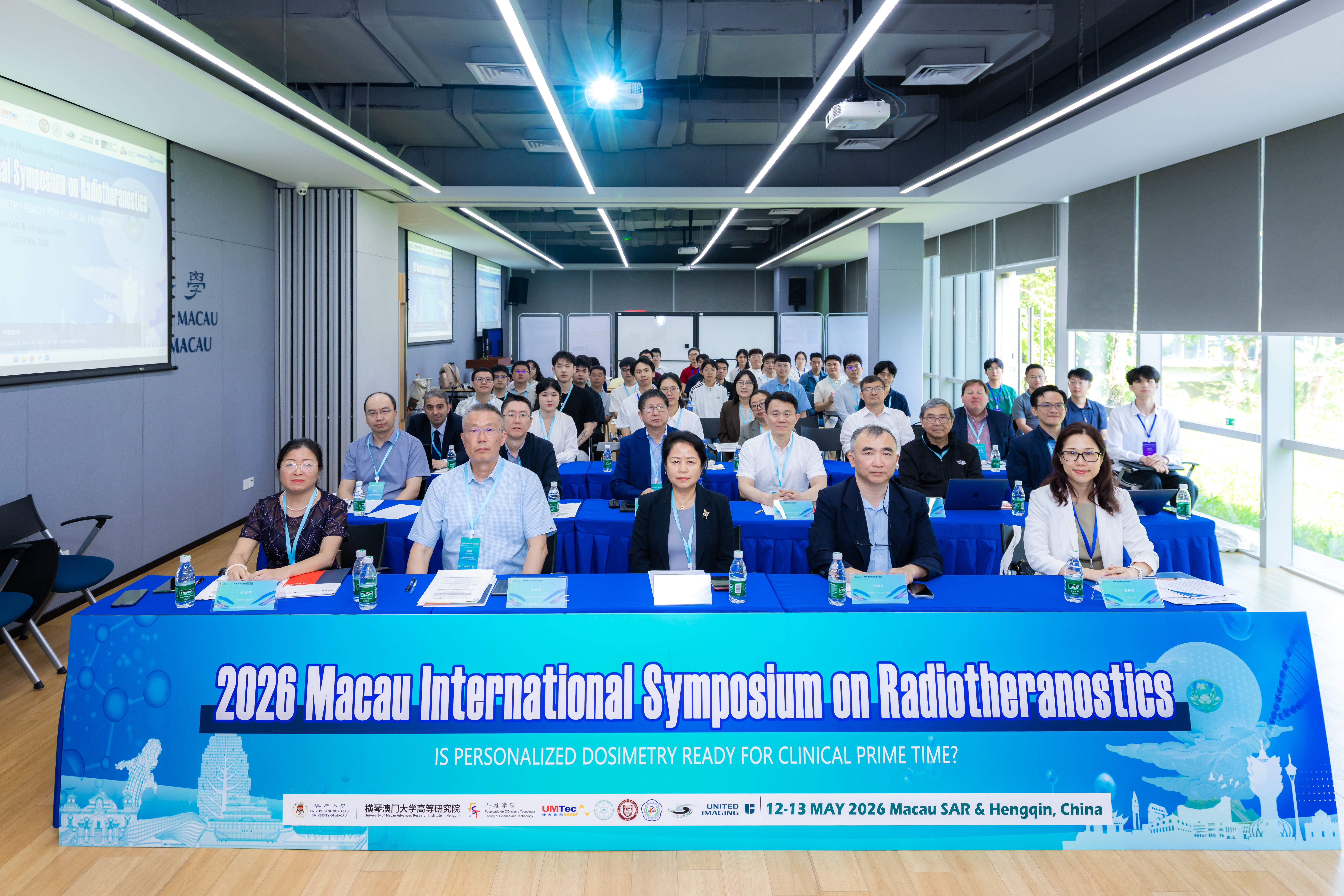
Group Photo at Hengqin
橫琴澳大高等研究院會場合照
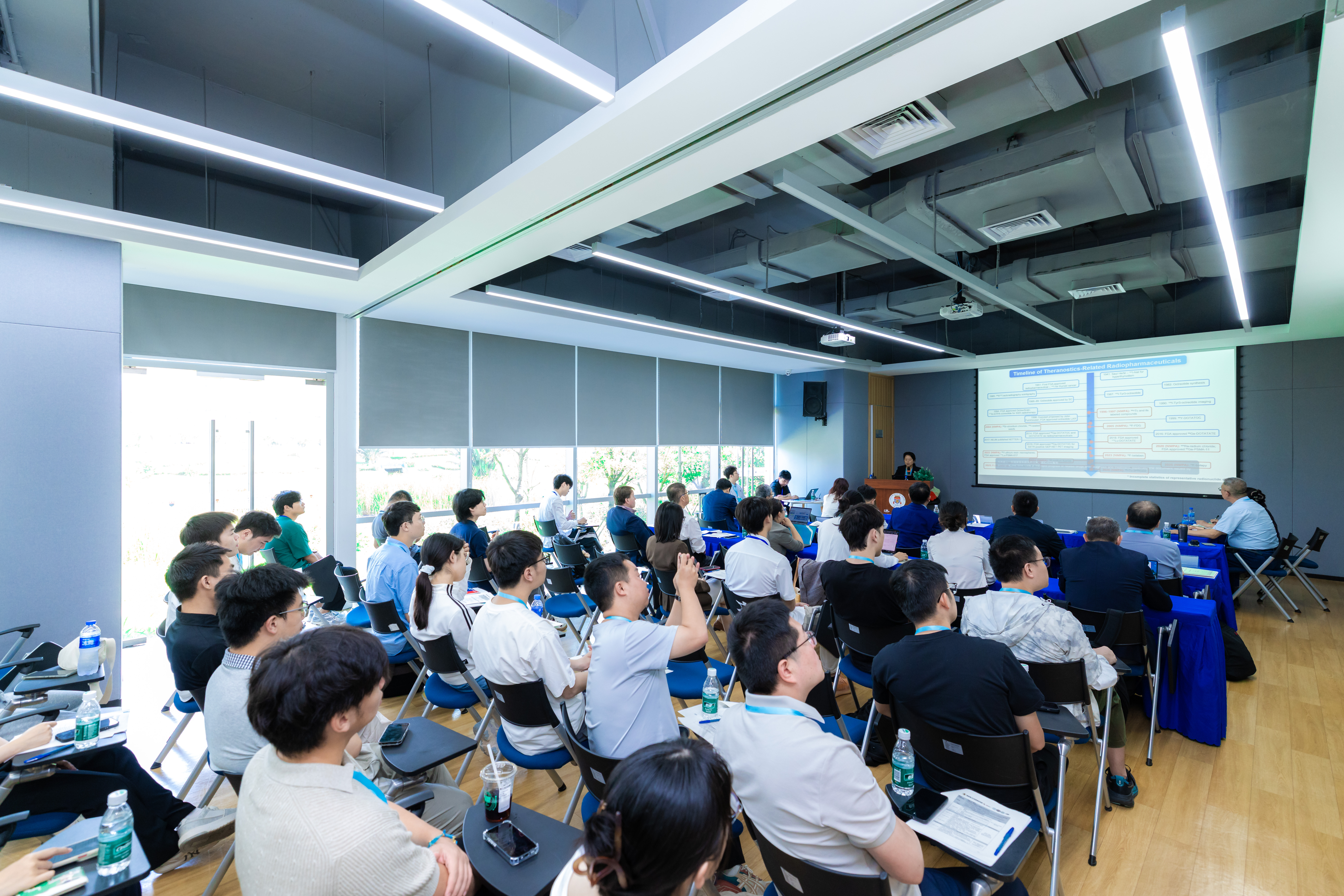
The venue at the University of Macau Advanced Research Institute in Hengqin
橫琴澳大高等研究院會場