


UM FST achieves breakthroughs in bioinspired hydrogel technology
澳大科技學院團隊在仿生水凝膠研究取得突破性進展
A research team led by Lei Iek Man, assistant professor in the Department of Electromechanical Engineering of the Faculty of Science and Technology (FST) at the University of Macau (UM), has developed a novel concentric ice-templating technique that constructs hydrogels with bioinspired circumferentially aligned fibrous structures. This breakthrough overcomes the limitations of traditional ice-templating methods, which can only produce simple structures such as honeycomb or lamellar structures. The new approach significantly improves the mechanical properties of hydrogels in terms of compression, toughness, and fatigue resistance, thereby expanding the scope of application of the ice-templating method and improving the mechanical properties of artificial hydrogels. The findings have been published in Science Advances, an internationally renowned multidisciplinary journal.
Natural materials with circumferential fibrous structures, such as intervertebral discs, arteries, and fish swim bladders, possess remarkable mechanical properties. Although traditional ice-templating can create bioinspired structures through controlling directional ice growth, the range of achievable structures remains severely limited and these techniques are often costly and inefficient, making it difficult to replicate the mechanical performance derived from the structures of natural materials. The research team discovered that slow freezing could induce ice crystals to grow parallel to the cooling source. Based on this insight, they, for the first time, developed ‘concentric ice-templating’ to construct circumferential fibrous structures in hydrogels. Additionally, the team improved existing annealing techniques by introducing a ‘rotary compression annealing’ strategy to densify the microstructure and increase its crystallinity. With these approaches, the resulting hydrogel retains a high water content (85 wt.%) while achieving multiple mechanical advantages, including high strength, toughness, fatigue resistance, compressibility, and burst pressure.
This innovative bionic hydrogel holds broad application potential, particularly in soft robotics and tissue engineering. It can be used to develop hydrogel pneumatic actuators with high actuation force, soft grippers for handling delicate objects, bionic robotic fish, and underwater camouflage soft robots.
Prof Lei is the corresponding author of the study, and Gu Wenxi, a doctoral student in FST, is the first author. The research project was supported by the Science and Technology Development Fund of the Macao SAR (File No.: 0119/2022/A3, 0009/2023/ITP1, 0113/2024/RIB2), UM, and the University of Macau Development Foundation (File No.: SRG2022-00038-FST, MYRG-GRG2023-00225-FST-UMDF). The full version of the research article is available at: https://www.science.org/doi/10.1126/sciadv.adv7786.
澳門大學科技學院機電工程系助理教授李奕雯及其研究團隊首次利用“同心冰模板法”,成功製備出具有仿生環向纖維結構的水凝膠,解決了傳統技術僅能生成蜂窩或層狀結構的局限性,使材料在抗壓性、韌性及抗疲勞性方面表現顯著提升,拓展了冰模板法的應用範疇及人工水凝膠的力學性能。相關研究成果已發表於國際知名綜合性學術期刊《科學進展》(Science Advances)。
自然界中,如椎間盤、血管、魚鰾等生物組織因具有環向纖維狀結構而具備優越的力學性能。傳統冰模板法通過控制冰的定向生長來製造仿生結構的水凝膠,只能製造有限結構,且成本高昂、效率低下,嚴重限制了仿生水凝膠在性能上與自然材料的匹配。研究團隊發現,通過慢速冷凍能誘導冰晶平行於冷源生長,據此研發出“同心冰模板法” ,首次成功構建新的環向纖維結構。 此外,團隊亦改良現有退火工藝,開發出旋轉壓縮退火方法,令水凝膠在保持 85 wt.% 含水量的情況下,具備高強度、高韌性、抗疲勞性能、可壓縮性、高爆破壓等多重機械性能,使材料微觀結構更加緻密,進一步提升結晶度。
新型仿生水凝膠具備廣泛應用潛力,特別適用於軟體機器人和生物再生工程領域,如製作具高驅動力的水凝膠氣動驅動器、軟體抓手、仿生機器魚和水下作業的偽裝軟體機器人。
該研究通訊作者為李奕雯,第一作者為澳大科技學院博士生谷文熙。該研究由澳門特別行政區科學技術發展基金(檔案編號:0119/2022/A3、0009/2023/ITP1、0113/2024/RIB2)、澳門大學及澳門大學發展基金會(檔案編號:SRG2022-00038-FST、MYRG-GRG2023-00225-FST-UMDF)資助。全文可瀏覽:https://www.science.org/doi/10.1126/sciadv.adv7786。

How concentric ice-templating technique constructs hydrogels with bioinspired circumferentially aligned fibrous structures, and comparison of their performance with other hydrogels
“同心冰模板法”製備具有仿生環向結構水凝膠示意圖及與其它水凝膠的性能對比

Lei Iek Man and her research team
李奕雯及其研究團隊
UM FST summer camp attracts outstanding students from around the world
澳大科技研習營吸引全球優秀學生
The 6th Summer Camp for Outstanding Students, jointly organised by the Faculty of Science and Technology (FST) and the Institute of Collaborative Innovation (ICI) at the University of Macau (UM), attracted applications from over 600 higher education students from around the world. After a rigorous selection process, more than 90 students from world-renowned universities, including Purdue University, the University of Ottawa, the University of Bristol, Xi’an Jiaotong University, and Beihang University, were chosen to participate in the camp. During the camp, participants took part in various learning activities, experienced UM’s environment, and explored the cultural charm of Macao.
Under the guidance of UM professors, participants visited state key laboratories and research centres at the university, and took part in activities to explore cutting-edge research fields. Seminars were also organised to provide participants with helpful advice on academic and career development. In addition, campus tours and Macao cultural experience tours were organised, providing participants with a deeper understanding of UM’s international learning environment and Macao’s rich historical and cultural landscape.
Xu Cheng-Zhong, dean of FST and interim director of ICI, highlighted that the summer camp represents an important step in FST’s efforts to promote international exchanges and nurture future talent in science and technology. The camp also serves as an important platform for attracting talented and forward-thinking young individuals to join UM.
Dai Ningyi, assistant dean of FST and coordinator of the summer camp, expressed gratitude for the support of various UM units, including the State Key Laboratory of Internet of Things for Smart City, State Key Laboratory of Analog and Mixed-Signal VLSI, Centre for Regional Oceans, Centre for Data Science, Centre for Artificial Intelligence and Robotics, and Centre for Cognitive and Brain Sciences. She highlighted that these units, along with FST, have collectively built a comprehensive, interdisciplinary, and high-quality learning and exchange platform, enabling participants to gain a deeper understanding of UM’s unique characteristics and strengths.
Wang Yidi, a participant from the Southern University of Science and Technology, said that he was impressed by UM’s beautiful campus and international environment. He particularly highlighted the cutting-edge research equipment such as the motion capture system and underwater robots, which he found eye-opening. Zhang Ruochen, a participant from Xi’an Jiaotong University, was impressed by the innovative design of the UM Library and the university’s high-calibre faculty.
Since its launch in 2019, the summer camp has been held six times, drawing thousands of applications from students at world-renowned universities, including Peking University, Shanghai Jiaotong University, the University of Malaya, the University of Toronto, and the University of Washington. Hundreds of these outstanding students have been selected to join the camp.
澳門大學科技學院與協同創新研究院合辦“第六屆優秀大學生暑期研習營”,吸引超過600名來自世界各地的高校學生報名。經過嚴格篩選,來自美國普渡大學、加拿大渥太華大學、英國布里斯托大學、西安交通大學、北京航空航天大學等知名高校共90多名學生於澳大開展研習,體驗澳大的校園氛圍及澳門的文化魅力。
研習營學員在澳大教授的帶領下,參觀了澳大國家重點實驗室及研究中心,探索澳大前沿科學研究領域;並透過座談會等活動,獲得了學術發展及職業規劃相關的寶貴建議。此外,研習營還為學員安排了校園導賞及澳門文化體驗之旅,使其更深入地了解澳大的國際化學習氛圍和澳門豐富多彩的歷史文化底蘊。
澳大科技學院院長、協同創新研究院代院長須成忠表示,是次研習營的舉辦,不僅是澳大科技學院推進國際交流、培育未來科技人才的重要一步,亦為吸引更多有實力、有理想的青年加入澳大打造了重要平台。
澳大科技學院助理院長、研習營統籌人戴寧怡感謝澳大智慧城市物聯網國家重點實驗室、模擬與混合信號超大規模集成電路國家重點實驗室、區域海洋研究中心、數據科學研究中心、人工智能與機器人研究中心、認知與腦科學研究中心的支持,共同構建了一個全方位、跨學科、高質量的學習及交流平台,協助學員更深刻地了解澳大的特色和優勢。
南方科技大學學生王一迪表示:“澳大校園環境優美且極具國際化特色,特別是動態捕捉系統和水下機器人等尖端科研設備的展示,讓我大開眼界。”西安交通大學學生張若琛則對澳大圖書館的創新設計和優質師資印象深刻。
研習營自2019年創辦以來,已成功舉辦六屆,累計吸引來自北京大學、上海交通大學、馬來西亞大學、多倫多大學、華盛頓大學等全球知名學府的數千名學生報名,其中數百名優秀學生獲選參與。
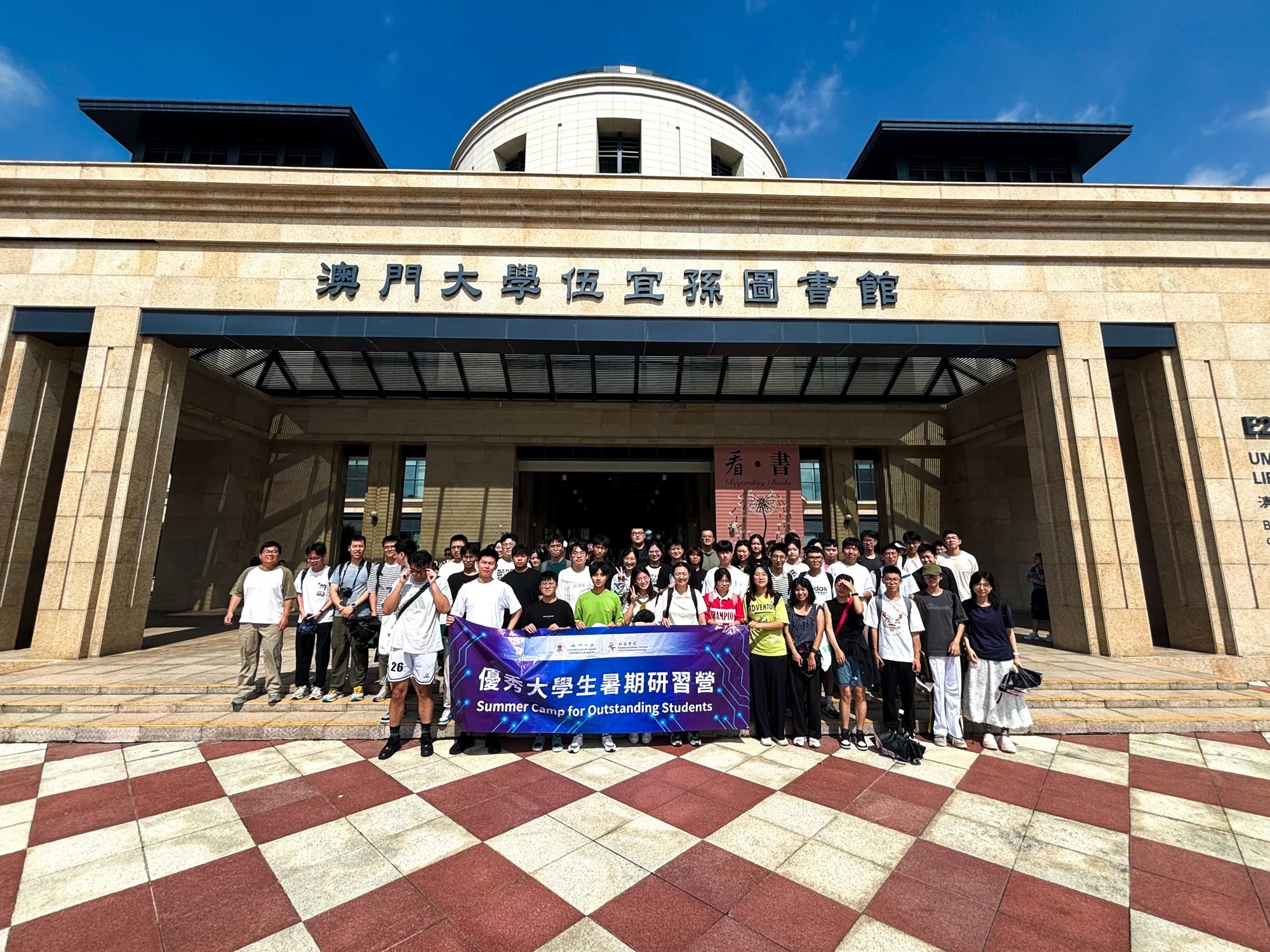
UM FST and ICI jointly organise the summer camp
澳大科技學院與協同創新研究院合辦研習營
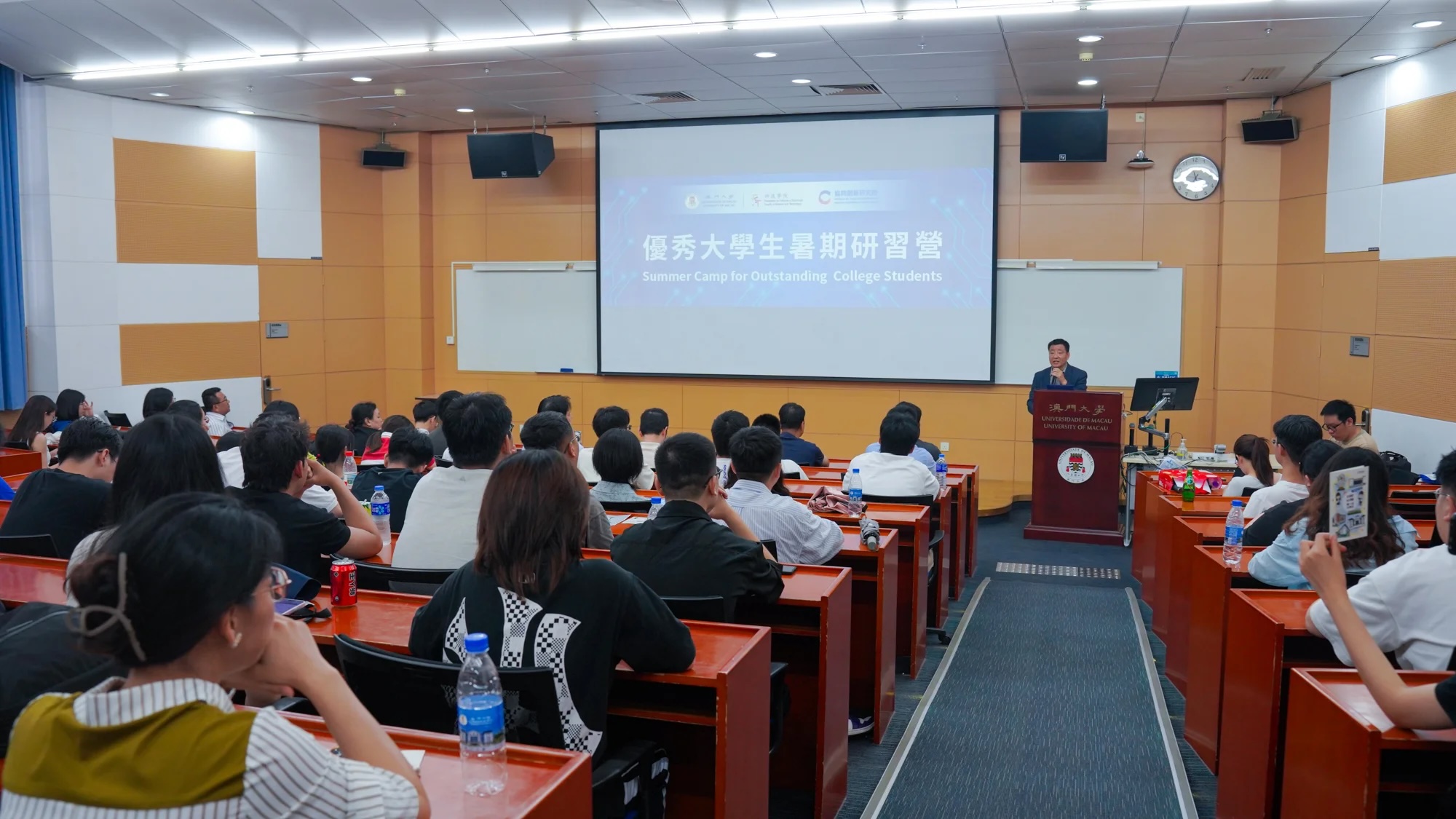
Xu Cheng-Zhong delivers a speech
須成忠致辭
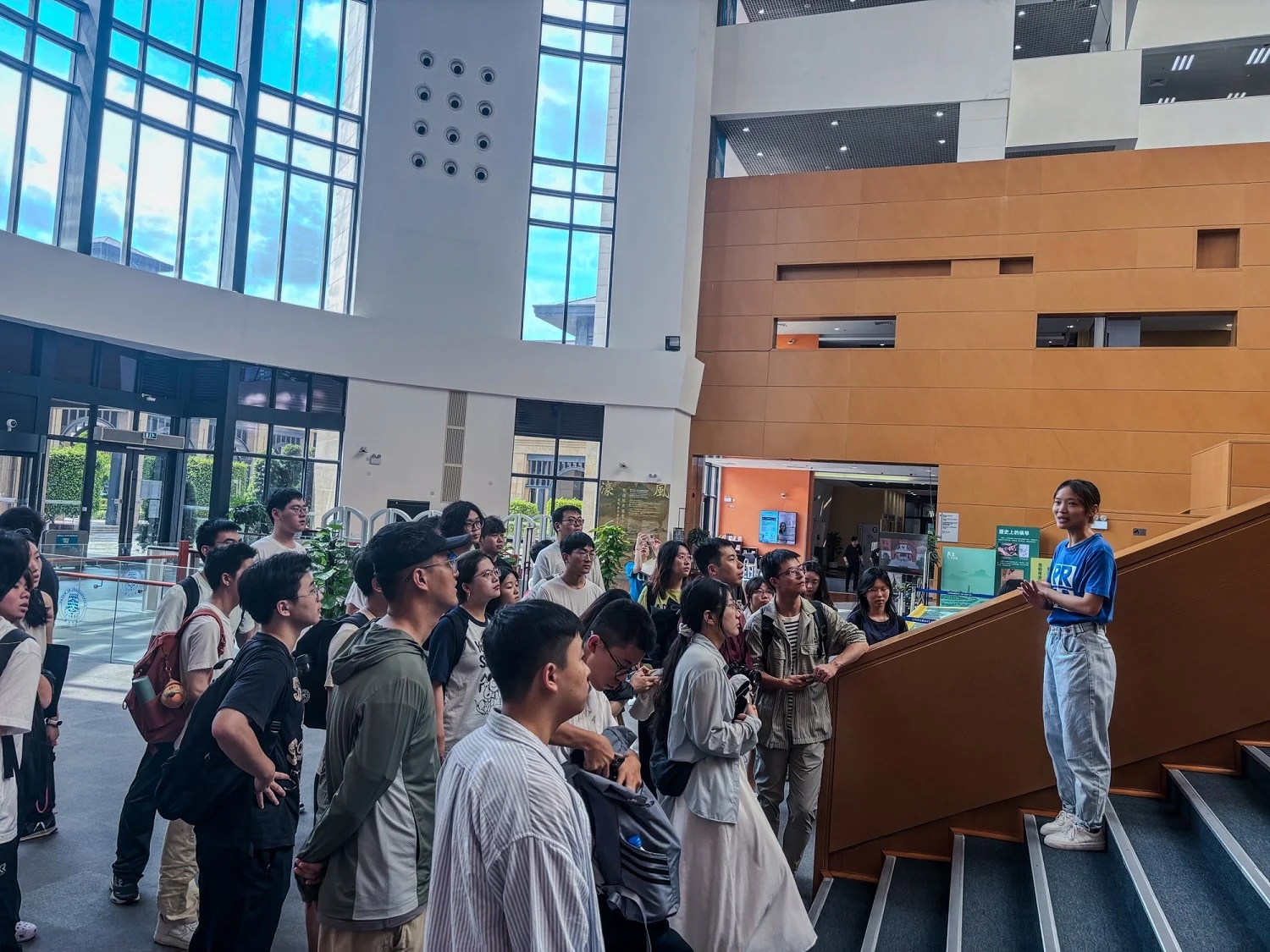
Participants tour UM
學員參觀澳大
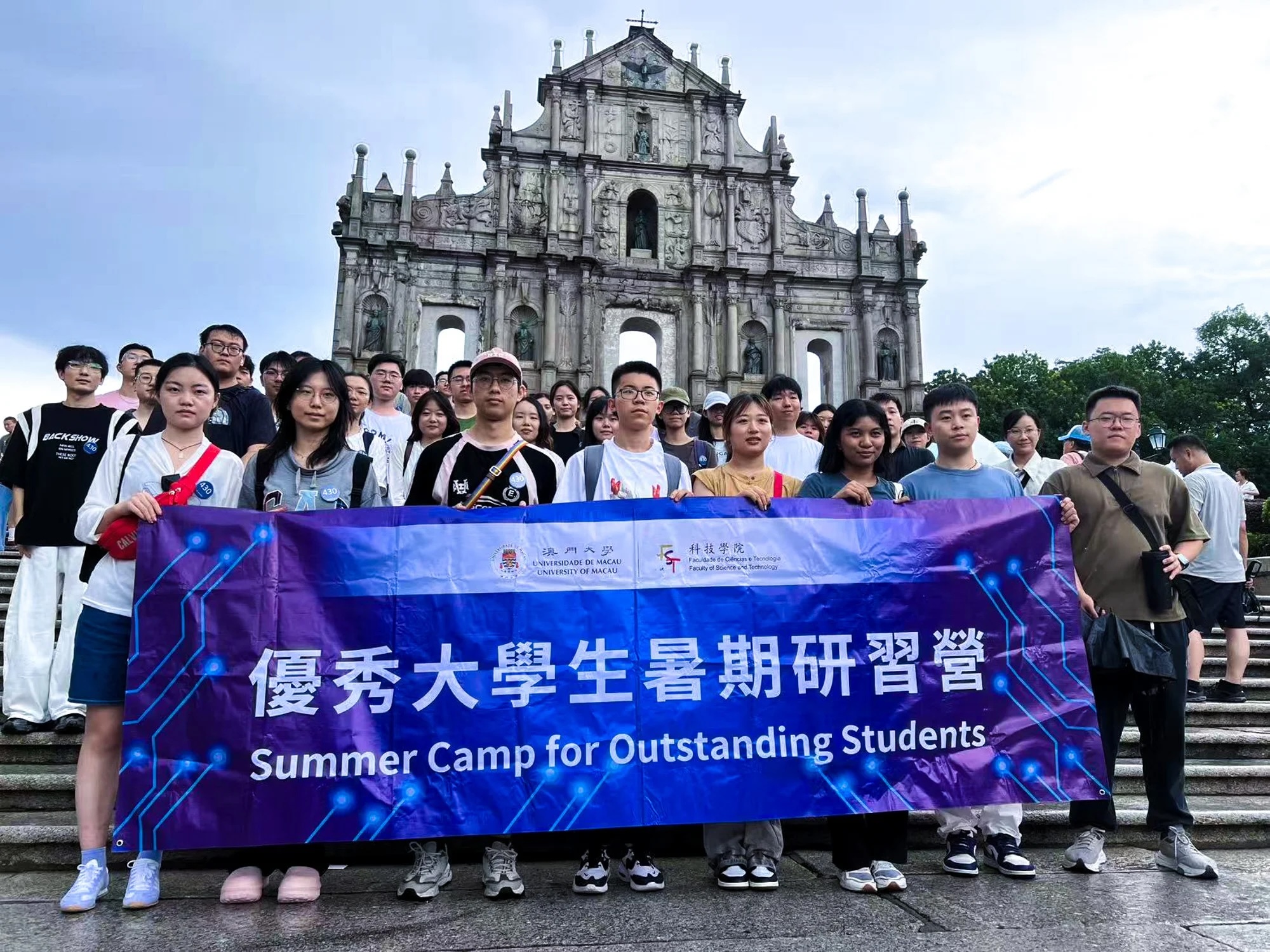
Participants learn about the history and culture of Macao
學員了解澳門歷史文化